Exploring Some of the Cultural and Nature Gems of Panay Island

May 28, 2022
A comprehensive travel guide to Panay Island, Philippines. Explore the heritage churches of Iloilo, the weaving traditions of Oton and Kalibo, the largest bell in Asia in Capiz, and the stunning Gigantes Islands. Discover cultural treasures across Iloilo, Capiz, and Aklan.
Philippines / Visayas

Exploring Some of the Cultural and Nature Gems of Panay Island

By Marky Ramone Go May 2022

The triangular-shaped island of Panay has gifted me with countless memorable travel experiences. Covering four provinces: Iloilo, Capiz, Aklan and Antique, it has taken up a large chunk of space in my memory vault. Despite that, I remain keen at the idea of returning to the island and when the Tourism Promotions Board of the Philippines (TPB) invited me to join a media tour, I immediately said "Yes".

Gigantes Islands Carles Iloilo Panay
The island-hopping wonders of northern Panay

For almost a week, I rekindled my love for Panay Island by returning to a few places I've been to before and learning about new places I've never heard of before. To sum it up, our cultural and great outdoor discovery tour of the island has given me the best of both worlds: of renewing my fondness and learning more about Panay Island.


Iloilo

Because I’ve been to the city of Iloilo several times, it was fine with me when I learn that we’re only going to spend a couple of days here (one in isolation as we await the result of our Covid-19 test) since I’ve already explored much of the city. Other reasons to visit the “City of Love” includes witnessing the Dinagyang Festival, going on a culinary adventure, doing a Visita Iglesia from the city to other towns in the province just to state a few. Here are the places we visited in Iloilo province.

Iloilo River Esplanade

Seen as a benchmark for river rehabilitation in the Philippines, Iloilo River is now long removed from its biologically dead status more than a decade ago, thanks to a rehabilitation program that went full swing in 2010.

Marky Ramone Go at Iloilo River Esplanade

Currently, the esplanade stretches a little over 9 kilometers with esplanade 10 undergoing construction. The morning after getting my negative RT-PCR test, I decided to go out on a short jog along the river esplanade.

Miag-ao Church

Built by the Augustinians in 1786, this Baroque church features tropical designs, Muslim, Chinese architecture, and even medieval Spanish architecture.

Miag-ao Church Iloilo UNESCO Heritage
Santo Tomás de Villanueva Parish: A fortress of faith

Declared as a National Shrine in 1973, Miag-ao Church (Santo Tomás de Villanueva Parish Church) was inscribed as a UNESCO World Heritage Site (as part of the collective Baroque Churches of the Philippines) in 1993. One of its many interesting design elements is its facade's bas-relief showing St. Christopher carrying Baby Jesus on a coconut tree.

San Joaquin Church and Bandi Cooking Demo

After our brief stop at Miag-ao Church, we proceeded to the town of San Joaquin where another old church stands uniquely apart from most Spanish-built churches in the Philippines.

San Joaquin Church Iloilo Battle Relief

Built in 1869, the church's facade features an intricate sculptured relief that distinctively portrays a non-religious event — the 1860 Battle of Tetuan where the Spanish defeated the Moors. On our way here, we stopped momentarily at San Joaquin Cemetery, an 1892 burial ground highlighted by a Baroque-designed mortuary and chapel constructed as the cemetery’s centerpiece.

Bandi Cooking Demo Iloilo
The sweet art of making Bandi (caramelized peanuts)

Outside the church, some local women showed us a demonstration of how to cook one of Iloilo's famous sweet snack which is the Bandi, a sweet made of sugar-caramelized peanuts.

Hablon Weavers of Salngan

"Hablon", which came from the Hiligaynon word "habol" meaning "to weave", is a hand-woven fabric made by the women of Panay for more than a century. However, in the town of Salngan in Oton, Iloilo, this weaving tradition skipped a few generations. It was only until in the late 2000s when this weaving practice made a renaissance after the LGU traced the problem of malnutrition in the children population to mothers spending more time trading farm produce in the market.

Hablon Weavers Salngan Iloilo
Resurrecting a living tradition through a 'weave from home' initiative

A cooperative was set up to encourage mothers to find a livelihood near their home. It was then they decided to resurrect their tradition of 'hablon' weaving. Thus, born the 'weave from home' livelihood of the community mothers. The initiative hit two birds with one stone; first it solved the malnourishment problem and second, it reintroduced a living tradition.

Traditional Hablon weaving process

Since then, the community started fielding orders from all over the country. They used to create and supply the 'sablay' used in UP's graduation rites until it ceased during the pandemic.
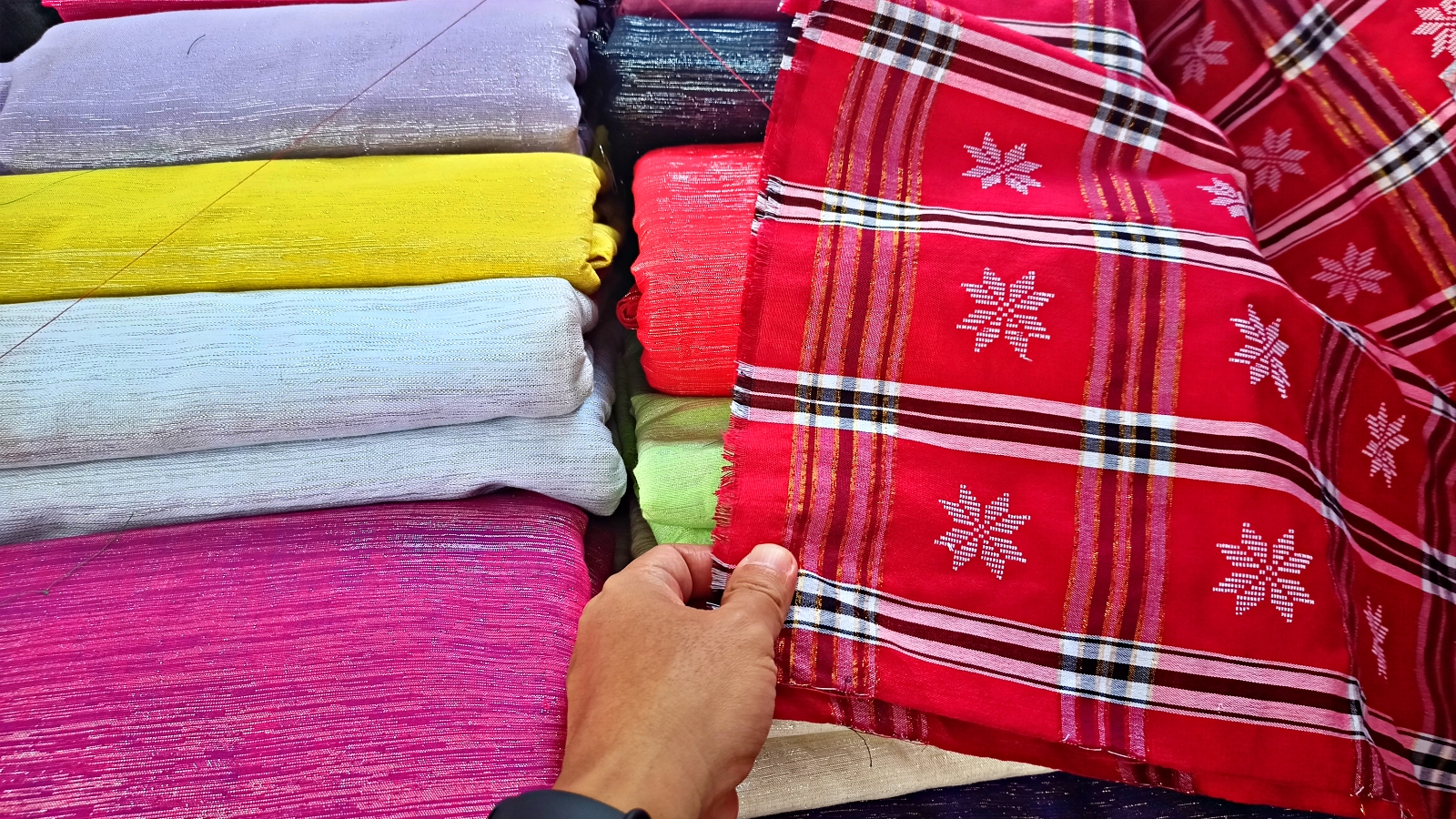
Vibrant Hablon creations

The pandemic really hit the community weavers hard. Market demand went down. Today's almost 35 women hablon weavers can only pray for a future as colorful as their creations.

Balay Kape Nagpana

Balay Kape Nagpana is a seed-to-cup coffee farm and cafe run by members of the Ati community in barangay Nagpana, Barotac Viejo, Iloilo through the funding and training of an NGO group Taytay Sa Kauswagan (TSKI) and the DOST. The Ati women of Nagpana carefully handpicks the coffee beans and roast them to produce an aroma blend of Robusta coffee beans. Kape Nagpana also processes and sells Kape Miro. Miro is a Hiligaynon term for Asian Palm Civet usually found in the mountains on this part of Iloilo province. More prevalent in the lush forest surrounding Sitio Nagpana, they normally feast on coffee cherries, pulpy fruits and wild berries.

Ati Community Balay Kape Nagpana
A welcome coffee made by the Ati women of Nagpana

Before we tasted their coffee, several Ati women greeted us with a welcome dance and a song about the history of their community.

Gigantes Islands and Tangke Lagoon

We docked at the white powdery shore of Cabugao Gamay — the most visited island in the Islas de Gigantes chain — just before lunchtime. As soon as the table was set-up for our lunch, the sunny skies quickly disappeared, and it pulled in dark clouds that showered us with a heavy downpour. Running for cover with each of us carrying a casserole and plateful of seafood dish, the sky as if playing a trick on us, immediately cleared up revealing back the sunshine we arrived into.

Gigantes Islands View Marky Ramone Go
Panoramic vistas from the crest of Cabugao Gamay

After feasting on the freshest seafood catch of prawns, giant crabs, grilled fish and squid plus of course, platefuls of 1-peso scallops, I hurried myself atop this hill in Cabugao Gamay, the most popular island in Gigantes Islands, to enjoy the cool breeze and the stunning scenery.
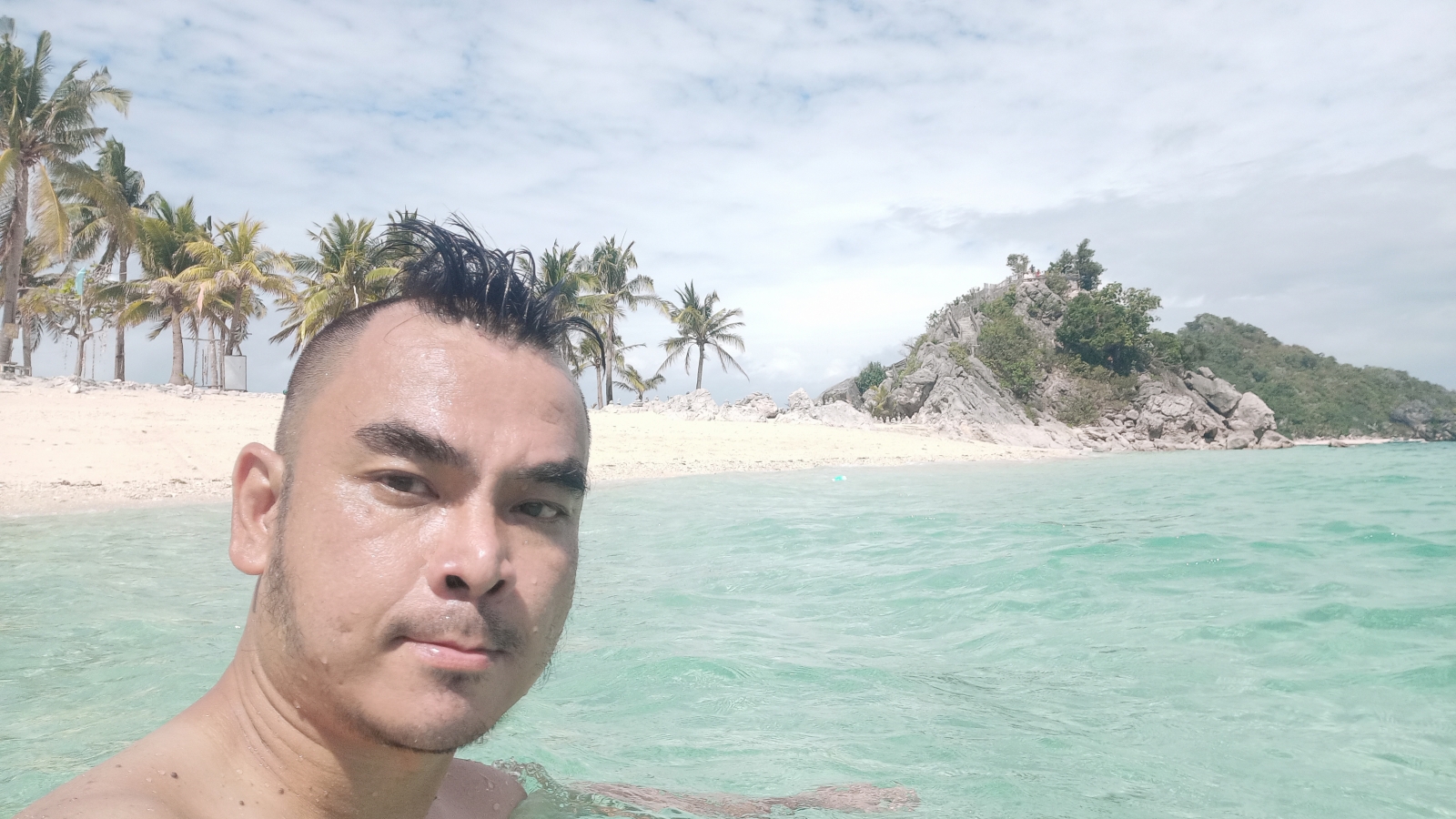
Marky Ramone Go at Gigantes

Afterward, I plunged into the island's refreshing warm waters. Being here the second time never gets old. I spent the remaining hour of our stay here practicing my breathe hold in the crystal clear waters of Cabugao Gamay.

1 peso scallops Gigantes Iloilo
The legendary 1-peso scallops of Carles

Tangke Lagoon is a natural saltwater pool enclosed by the towering jagged cliffs of Isla de Gigantes Sur in Carles, Iloilo. Since you must dock your boat beside a razor-sharp cliff passageway, you need a favorable wind direction, manageable current, and just enough tidal level to get inside.

Tangke Lagoon Gigantes Sur

On my first trip to Gigantes in 2017, we were unable to go here due to the strong waves. Fortunately, the conditions were just right this time for us to enter the lagoon.

Where to stay in Carles, Iloilo as the jump-off base for your Gigantes Islands hopping tour? check out Solina Beach.

Terra Verde Heritage Farm (Ajuy)

Taking the baton from the old Hacienda San Antonio, the modern-day Terra Verde retains the heritage vibe of this old muscovado mill by incorporating the remnants of its old form as a sugar cane plantation. Today, visitors can not only enjoy the clean breeze of air and the wide green open space, but also learn about its history.

Terra Verde Heritage Farm Ajuy Iloilo
The old "Simboryo", a smokestack for muscovado sugar production

Utilizing modern and traditional farming practices, Terra Verde serves farm to table food like cassava custard, buko pie, coconut candy balls to go along with other local Visayan dish — with ingredients sourced within the farm.

Silagon Mangrove Eco-Park

Another mangrove forest can be found in Panay approximately 150 kilometers southeast of Bakhawan Eco-park in Kalibo, in the barangay of Silagon in Ajuy, Iloilo. The Silagon Mangrove Eco-Park is a community-led project that covers 283 hectares of iMPA (Ideal Marine Protected Area) — 37 hectares of which are mangrove forest, 7 hectares are coral reefs, and 3 hectares are seagrass beds.

Mangrove Planting Silagon Iloilo
Contributing to the ecosystem: Planting baby mangrove trees

Visitors to this eco-park can walk on the 300-meter stretch of bamboo boardwalk that extends to the shallow seabed where they can also help plant baby mangrove trees, which our small group enjoyed.

Silagon Mangrove Forest Iloilo Boardwalk

Capiz

I've gone on two or three trips to Capiz province before which includes a long road trip, a spelunking expedition and to cover the Sinadya Festival. Another must-do in Capiz aside from gorging on fresh seafood and beach-hopping is to set out on a heritage and cultural exploration of the province.

Santa Monica Church in Pan-ay

This church was built in 1884 following a typhoon that destroyed the previous one built during the 1770s (an older church is said to have been built on the same site as early as 1698).

Santa Monica Church Pan-ay Capiz

Atop the church's 5-storey bell tower is what locals call the "Dakong Lingganay", Asia's largest church bell. When it is sounded, the bell can be heard up to eight kilometers away.

Dakong Lingganay Asia's Largest Bell Capiz
Cast from 70 sacks of coins: The mighty Dakong Lingganay

Dakong Lingganay was cast out of 70 sacks of smelted coins donated by the town people in 1878 following the devastating typhoon of 1875.

Capiz Ecology Park and Cultural Village

Learning about the "Binukot" and other Capiznon traditions will add up to your stock knowledge at Capiz Ecology Park and Cultural Village. Our group met Mang Kune and his wife Nanay Modena who is one of the last remaining "Binukot" woman in Capiz.

Capiz Ecology Park Cultural Village
Preserving Capiznon heritage in Cuartero

A "Binukot" is a young woman raised and kept in seclusion, so she may attain a princess-like status among potential suitors (in our modern times though, it can be seen as a prison-like upbringing).

Nanay Modena Binukot Capiz

This is a traditional practice of the Panay-Bukidnon people dating back to the pre-colonial Visayas. According to Mang Kune, his wife never left the house until she reached her mid-20's when they started planning their arranged marriage.

Cultural artifacts Capiz

Among their nine children, were four women they chose not to raise in a binukot tradition. "Pinag-aral na namen sila", he tells us in their Kinaray-a language.

Cultural performance Capiz

Located in Cuartero, Capiz, this outdoor spot serves a double purpose of a nature park and cultural village. Visitors here can watch cultural performances such as courtship dances, listen to serenade songs, and study cooking demonstrations of Capiz delicacies around a lush setting dotted with replicas of different tribal houses in the country.

Aklan

As a three-time participant of the Ati-Atihan Festival, I’ve grown to love the small-town vibe of Kalibo. A gateway to many locations in Panay such as Boracay, one can also find a decent number of cultural and great outdoor settings here like the Bakhawan Mangrove Eco-Park, which is said to be among the biggest mangrove forests in Asia.

Ati-Atihan Gallery in Kalibo

Kalibo's Ati-Atihan is my favorite Philippine festival. I've experienced it thrice already (once covering for Manila Bulletin in 2016) and I would have loved to witness it again if not for the pandemic. I hope by next year the pandemic will be behind us and by that time, the Ati-Atihan can come back in its full color. I recommend you experience it as well.

Ati-Atihan Gallery Kalibo Aklan
The vibrant legacy of Kalibo's premier festival

Take it from someone who has only danced to the Clash's "Guns of Brixton" song but ended up doing a bit of the signature Ati-atihan single-forward, step-tap jiggly sequence once the Ati's drumming beats started. Until then, this gallery located inside the town plaza of Kalibo displays all the colorful costumes of past Ati-Atihan festivals.

Dela Cruz House of Piña

I first learned about the House of Piña during my first visit to Kalibo many years back. That time, they only set-up in a modest house inside a residential area. Today, the Dela Cruz House of Piña has moved into a bigger place: a minimalist mansion with ample space for a small gallery, weaving stations and even living spaces for in-house weavers — most of whom are fourth-generation Piña weavers.

Dela Cruz House of Piña Aklan
Heritage in every thread: Fine Piña weaving

Antique

Unfortunately, during our visit to Panay in January of 2022, the Covid cases nationwide shoot-up causing a number of provinces to tighten up restrictions among travelers. One of them was Antique causing us to drop the province from our itinerary.

Fortunately, I’ve explored the province a few times in the past and would recommend the islands of Seco and Mararison as must visits. Oh, and don’t skip the river tubing at Tibiao River and follow it up with a soothing hot kawa bath.

Check out the map guide below

Trip map created with Wanderlog

Flavorsome Heirloom Cuisine & Heritage Vibe at Casa Simeon | Albay

May 26, 2022
Step inside Casa Simeon in Bacacay, Albay—a beautifully restored 1920s bahay na bato ancestral home turned heritage bed and breakfast serving heirloom Bicolano recipes.
Albay / Heritage / Gastronomy

Flavorsome Heirloom Cuisine & Heritage Vibe at Casa Simeon | Albay

By Marky Ramone Go May 2022

Hitting the ground running within moments of our arrival at Bicol International Airport, we headed to the picturesque Sumlang Lake where a filling grub was made more memorable by the beautiful backdrop of Mayon Volcano. A demonstration of preparing the native cuisine Pinangat and the process of stripping and weaving abaca, followed by a scenic bamboo raft ride rounded of our stay before departing for the town of Bacacay shortly before sunset.

Casa Simeon Albay Dusk View
The arresting facade of Casa Simeon standing proud against the shifting Bicol horizon.

Reeling after the exhausting day that began when I woke up at 5:00 in the morning after returning from Davao to Manila the previous evening, I wished we would go straight to our lodging so I could rest up for the remainder of our 6-day trip of the Bicol region.

Media Team at Casa Simeon
A warm welcome awaits visitors inside the beautifully lit wooden halls.

However, as soon as we got to our dinner location, all feelings of weariness in my body was swiftly replaced by captivation as Casa Simeon arrested my attention. Magically positioned against the dimming blue skies, my line of sight quickly focused on the wooden-structure of the second floor and the distinctive "bahay na bato" foundation of the ground floor.

Ancestral Bed and Breakfast House

As part of the #PTIPBicol2022 media familiarization tour organized by the Tourism Promotions Board of the Philippines (TPB), we arrived to a cultural performance spectacle. The instant we stepped foot inside, a group of young men and women adorned with colorful clothing greeted us before hurriedly performing a traditional dance called the "Sinakiki", a courtship dance that originated in the municipality of Rapu-Rapu in Albay.

Sinakiki Traditional Dance Performance
The long dining table.

Following the performance, we took our seat at the second-floor dining hall. The rooms located on both sides of the hallway was transformed into charming accommodations — totaling 9 rooms of Family Room, De Luxe Queen and De Luxe Twin classifications.

Casa Simeon Second Floor Hallway
The main hallway leads to uniquely preserved boutique heritage accommodations.

Apart from the restaurant and lodging features, Casa Simeon also has a library, a coffee shop and outdoor dining in the garden. Simeon and Beatrice Alparce originally owned and constructed the home in the 1920s, but it was momentarily abandoned during World War II when the Japanese blitzed through the town of Bacacay, forcing the Alparce family to flee and hide for safety.

Vintage Interio details Casa Simeon
Every vintage corner echoes tales of survival from the early 20th century.

Expecting the worst, the Alparce couple was delightfully surprised to discover the house unscathed when they returned at the end of the war. In what could be a good omen of things to come, the house then survived numerous typhoons and earthquakes. Nevertheless, as father time remains unbeatable against all living creatures, the passage of time brings the same effect to structures no matter how strong. When the new millennia rolls in, it became evident that the future Casa Simeon would need to go through some refurbishment.

Refurbished Heritage Dining Area
Meticulously maintained furniture elements keeping the ancestral vibe intact.

In 2018, the Alparce's grandson Enrico Alparce Calleja led the restoration of his grandparent's dream house and baptized it with a new name: Casa Simeon. He then also transformed it into a specialty lodging serving heirloom recipes.

Antique Display Cabinets
Priceless ancestral mementos proudly exhibited across the property.

Casa Simeon co-owner and Enrico Alparce Calleja's wife Jessica Noelle Wong points out the unique experience of staying in a century-old Spanish-colonial house "You not only sense the warmth of the wood beneath your feet, you also get a feel of the culture and history of the Philippines"

Intricate Wooden Windows Capiz
The rooms are also cozily designed.

After eating more than I should since we were served with a buffet menu of Cosido (Bicol's version of fish stew), Bicol Chicken Tinola, Kare-Kare and one of the most satisfying lechon kwali I've ever had, I imagined how awesome it would be if I could stay in one of Casa Simeon’s rooms afterwards.

Casa Simeon Decorative Details
Thoughtful design arrangements accentuating the old-world colonial style.

It would be charmingly lovely waking up in an ancestral bed and breakfast the next morning. Well, that’s something to look forward to next time.

Additional photo credits: Sir Noel Amata and Casa Simeon Facebook Page. An edited version of this article first appeared on SpotPH.

Revisiting the 7 Lakes of San Pablo City | Laguna

May 19, 2022
A decade-long retrospection on the Seven Lakes of San Pablo, Laguna. Explore the twin lakes of Yambo and Pandin, the urban charm of Sampaloc, and the hidden gems of Mohicap, Palakpakin, and Calibato in this comprehensive nature and heritage guide.
Luzon / Laguna / Lakes

Revisiting the 7 Lakes of San Pablo City | Laguna

By Marky Ramone Go May 2022

In the decade that passed since I first explored the seven lakes of San Pablo City in Laguna my wanderlust expanded beyond the Philippines and to several countries in Asia. I consider my initial journey to the city of lakes as one of those earliest moments on the road that led me to choose a life of traveling.

Lake Sampaloc View of Mt Banahaw
Mount Banahaw as seen from Lake Sampaloc

This is the reason why returning here ten years later also became an opportunity of retrospection — both on how the place and I had evolved or remained unchanged over time.

Lake Yambo Laguna
Lake Yambo

Gone are the presence of Cathy and Abigail, my companions when I went here in 2012, they are now replaced by a small group of travelers I’ve known since then. Travel writers and heritage advocates alike who love organizing trips to nearby provinces.

Travel Writers at Lake Yambo
Senyor Joseph, myself, Johann, Ferdz, Stephen, Sir George and Mam Pura

Our party of seven is composed of George who came with his wife Pura, herself a former travel writer. Known as Manilakad, he organizes walking tours in heritage districts all over Metro Manila and adjacent provinces. Joseph, our designated driver because he owns the SUV we rode on, is newly retired and is now documenting his trips through his YouTube channel Senior Biyahero. There’s also Ferdz, a fellow travel writer with whom I have traveled on numerous media trips, Stephen, a heritage advocate who travels all over the country mapping out historical landmarks, and Johann, an avid mountaineer and backpacker.

Seven Lakes San Pablo Guide

Our 2-day itinerary aims to cover all seven lakes in San Pablo City before heading to Dolores, Quezon to spend a night at Bangkong Kahoy Valley and capping it off by witnessing the Pahiyas Festival in Lucena.

Twin Lakes of Yambo and Pandin

The road leading to Lake Pandin has undergone massive changes. The lake's once-calm appearance was marred by new concrete structures. Ten years ago, the area around the lake was nearly barren, but this is no longer the case. We decided to drive to its sister lake, Yambo, because the way leading there seemed more enticing.

Laguna Nature Tripping
Always get a dose of nature tripping

The two along with Sampaloc are the most popular among the seven lakes of San Pablo. Guests can board a bamboo raft and even enjoy a lunch in the middle of the lake. One can simply hike over to the opposite lake, which is separated by a round hill.

Lake Yambo Scenery
Post May 9 Blues

Structures appeared more regulated in Yambo. The nipa huts mix in nicely with the lush surroundings, which are highlighted by a large lawn that leads to the lake. We rented one bamboo raft, that was around 8-10 by 5-7 meters in size and could accommodate a long table and wooden seats for a dozen people, for a morning cruise.

San Pablo 7 Lakes Tour
Take me down to San Pablo City where the grass is green..

We stopped by some rock formations and took turns on a tall swing tied to a branch of a giant tree before hiking on the trail leading to Lake Pandin.

Lake Mohicap Laguna
Lake Mohicap

Our group stayed here for a couple of hours discussing other fascinating places in Laguna and planning for our next group trip. Afterwards, we drove to the other lakes stopping in each of them.

Lake Calibato San Pablo
Lake Calibato

We witnessed children playing in the rain jump off a bridge into Lake Palakpakin, hiked a hundred steps down to Lake Mohicap — to which we referred to as the “Last of the Mohicap” —, hid from the rain under the canopy of Lake Calibato's trees, and gorged on street fare by the banks of Lake Sampaloc.

Last Stage of Grieving: Nature Tripping

Since our trip happened a few days after the May 9 elections, I considered it as my last stage of grieving from the result. It was also assuring to learn that we were all heartbroken by the Presidential poll’s conclusion. In a way, going on a nature trip with old and new friends became the final stage of being anguished.

Lake Sampaloc Path
A boulevard with jogging and biking path was built along Lake Sampaloc

While I mourn for my country, I know that I have no right to be angry with the rest of the world so long as I am able to live in and explore the land I call home with complete freedom.

Lake Palakpakin Laguna
Lake Palakpakin

A lot has happened sandwiching my pair of journeys to San Pablo City. From a newbie traveler being in awe just by dipping in the waters of Lake Pandin to a travel writer who had gone to many places since then. In the end, despite the time in between, nothing much has changed in my sense of wonder and zest for wander.

Lake Sampaloc Street Food
Mobile food stalls near Lake Sampaloc

As we drove towards a pitch-black road to Bangkong Kahoy in Quezon, I realized that coming back to the seven lakes of San Pablo City made me more absorbed by it. From the lake's beginnings as ancient volcanic craters to the present day, it continue to foster the growth of native flora and fauna and stimulate the economies of the people in its immediate vicinity. Ten years after, the seven lakes of San Pablo City remains as picturesque as ever, most especially when stared upon on a beautiful sunny day.

Take a bow, Davao.

May 04, 2022
Uncover the fascinating duality of Davao City. A curated slow travel guide exploring the Malagos Philippine Eagle Center, historical culinary gems like Balay Oboza, single-origin cacao at the Malagos Chocolate Museum, and the ancestral handloom weaving of the Bagobo Klata tribe.
Davao City / Mindanao

Take a bow, Davao.

By Marky Ramone Go May 2022

Just when the bustling activities in Davao mirrors other big cities in the Philippines, the towering presence of Mt. Apo instantly looms and reminds visitors of the duality of Davao as an urban and countryside setting.

Jack's Ridge scenic view of Davao City skyline at night
Jack's Ridge at Night.

As many travelers before us would attest after exploring every nook and cranny peeling off the layers of the city one by one. They have discovered that apart from the booming offices, gigantic malls, suburban spaces and rush hour traffic, unearthing Davao’s rich tasting culinary scene, vibrant culture, historical gems, jovial festivals (like the Kadayawan) and spectacular outdoor destinations, are easier than downing a mouthful of the city’s most notable fruit, the Durian.

Philippine Eagle close up portrait at Malagos Center
We also went to the Philippine Eagle Center in Malagos that houses more than 30 Philippine Eagles, with half of them being captive bred. Seeing what famed aviator Charles Lindbergh described as "the air's noblest flier", up close was an awesome experience.

This is by no means a knack to the Durian fruit, which is an acquired taste, as evidenced by those who have assimilated to its savor (and strong odor) and ended up embracing it as the city’s soul fruit. The same goes for Davao City. As each visitor notices and gains fascination on the city’s many captivating gifts, Davao becomes a very likeable place enough for one to visit it again and again.

Fresh Durian and Marang fruits stall at Magsaysay market
After dinner, we went to the fruit stalls in Magsaysay to have some must-try Durian and Marang. We sampled three varieties of Durian. I ended up liking the Puyat variety more. I had a much better experience with Durian this time as compared to when I first tried it during my first visit in Davao a decade ago. With Marang, it's the same once you pop, you can't stop goodness.

Being the largest city in the country in terms of land area doesn't bottle up visitors from seeing more of Davao. A short drive or a boat ride here and there, will take you into a thrilling journey to the forested slopes of rugged mountain ranges where Philippine Eagles dare fly, on to where long white sandy shores meets the azure-colored sea waters, on to the mighty Davao river for some wild rafting ride, on to satisfying one’s sense of taste in a maze of street side gastronomic finds, and the list goes on.

Tola restaurant at the 1930 Balay Oboza heritage house structure
Last night's dinner was in another heritage house turned restaurant. Tola, Kan-anan sa Balay Oboza is a more than 90-year old wooden structure previously owned by the Oboza family. This heritage home was built in 1930 by Alfonso Oboza Sr. — the wartime Mayor of Davao during the 2nd Republic (Japanese occupation). Today, much of the 2nd floor's original look remains while the ground floor was transformed into the Huckleberry bar.

It seems like in Davao City, every wanderer can effortlessly please all their senses. No wonder locals proudly claim, “Life is Here”.

Molding artisanal chocolates at Malagos Chocolate Museum
Tried out chocolate making at Malagos Chocolate museum inside Malagos Garden Resort. It wasn't the whole process, since obviously, the first seven steps of chocolate making can take from several days to a few weeks. We proceeded to the molding part, which is the 8th of a 9-step process followed by Malagos. This is where you just need to pour the tempered chocolate to a molding tray with various shapes together with small amount of fillings (walnuts, almonds, dried mango, raisins etc). Afterward, cool it for half an hour and viola. Malagos Chocolate produces chocolates from single-origin cacao beans grown and harvested on their farm located on the foothills of Mt. Talomo — a dormant volcano beside Mt. Apo.

All that plus being the gateway to the cultural wonders of the rest of Mindanao, makes Davao City a must inclusion to every curious traveler’s itinerary.

Traditional backstrap loom weaving by the Bagobo Klata tribe
Davao City is home to many traditional weaving practices. One of them is the one made by one of the 11 indigenous tribes of Davao, the Bagobo Klata. They are known for their elaborate clothing and fine artistry.

Known to many as the hometown of our outgoing Philippine President, Davao should also be known among many things highlighted by its culture, heritage, cuisine, wellness, nature and so on.

So yeah, take a bow, Davao.

Bondi Bourke restaurant inside a restored 1920s Lat family ancestral house
we had dinner at @bondibourkeph which is charmingly housed inside this 1920's former ancestral home of the Lat family. It is one of Davao's six remaining heritage homes.
More Travel Stories