
My curiosity about this large patch of greens fronting Manila Bay was always piqued every time I saw it from a window of a plane whenever I flew into or out of the city. It stood out as an oddity in a cityscape chock-full of concrete.
#WorldCleanUpDay2022 at the Las Piñas - Parañaque Critical Habitat and Ecotourism Area (LPPCHEA)
I would see flocks of birds soaring over the forested part and I'd notice how the coastline wound away from the towering buildings along Roxas Boulevard. Seeing it from above filled me with both delight and foreboding. The former provided comfort in knowing that green places still existed in Metro Manila, while the latter inspired dread at the prospect of imminent development eating it up anytime now.

It turned out, as I later discovered, that part of the nature oasis located in Metro Manila's urban jungle was the one-hundred-seventy-five-hectare protected Las Piñas - Parañaque Critical Habitat and Ecotourism Area (LPPCHEA). Through Presidential Proclamation 1412, issued on the twenty-second of April 2007, this wetland park became the first critical habitat established in the country.

I would hear more about LPPCHEA from bird photographers, cyclists, and other nature enthusiasts, and each time my fascination with this outdoor haven grew. Finally, after several ditched chances of visiting the place, I finally set foot on LPPCHEA when I joined Meaningful Travels PH and other volunteers during the 2022 World Cleanup Day.
Nature Habitat in the City
Serving as a conservation model for the wise use of mangrove forests and other wetland areas, LPPCHEA also acted as a habitat for migratory birds and a natural sea barrier. The center was also used to educate the general public about the importance of wetlands.

Long Island, in the southwestern part, and Freedom Island, in the northeastern part of LPPCHEA in Parañaque City, were the two primary landmasses that made up the Las Piñas - Parañaque Critical Habitat and Ecotourism Area. The majority of LPPCHEA was made up of mudflats where a mangrove forest grew to over thirty hectares, but it also featured brush, grassy knolls, and a rocky and sandy shoreline.

Easily accessible and home to a wide variety of bird species, LPPCHEA was a popular spot for birdwatchers. According to a wildlife survey, there were more than eighty-two species of wild birds, forty-one of which were migratory, that could be spotted here. During low tide, many wildlife species grazed on the exposed invertebrates. Countless migratory birds escaping the treacherous Siberian winter made a pit stop here to rest and replenish.

The peak of migratory season happened in the months of August to April, when LPPCHEA served as a nature abode for more than 5,000 birds on a daily basis. Bird photographers would often capture endangered species like the Chinese Egret and Siberian Ruby-Throat, and common ones like the Little Egrets, Moorhens, and Black-Crowned Night Herons, just to name a few.

LPPCHEA was also home to our own endemic bird, the Philippine Duck — which was included in the International Union for Conservation of Nature and Natural Resources list of "vulnerable species". The Philippine Bulbul and the Colasisi were the other two indigenous birds that nested in LPPCHEA.
2022 World Cleanup Day
Also known as International Coastal Cleanup Day, this worldwide initiative was started in 1986 by the Ocean Conservancy and a coalition of international volunteer organizations. Since then, various governments around the world, including our own, through Presidential Proclamation No. 470, had declared every third Saturday of September as World Cleanup Day.

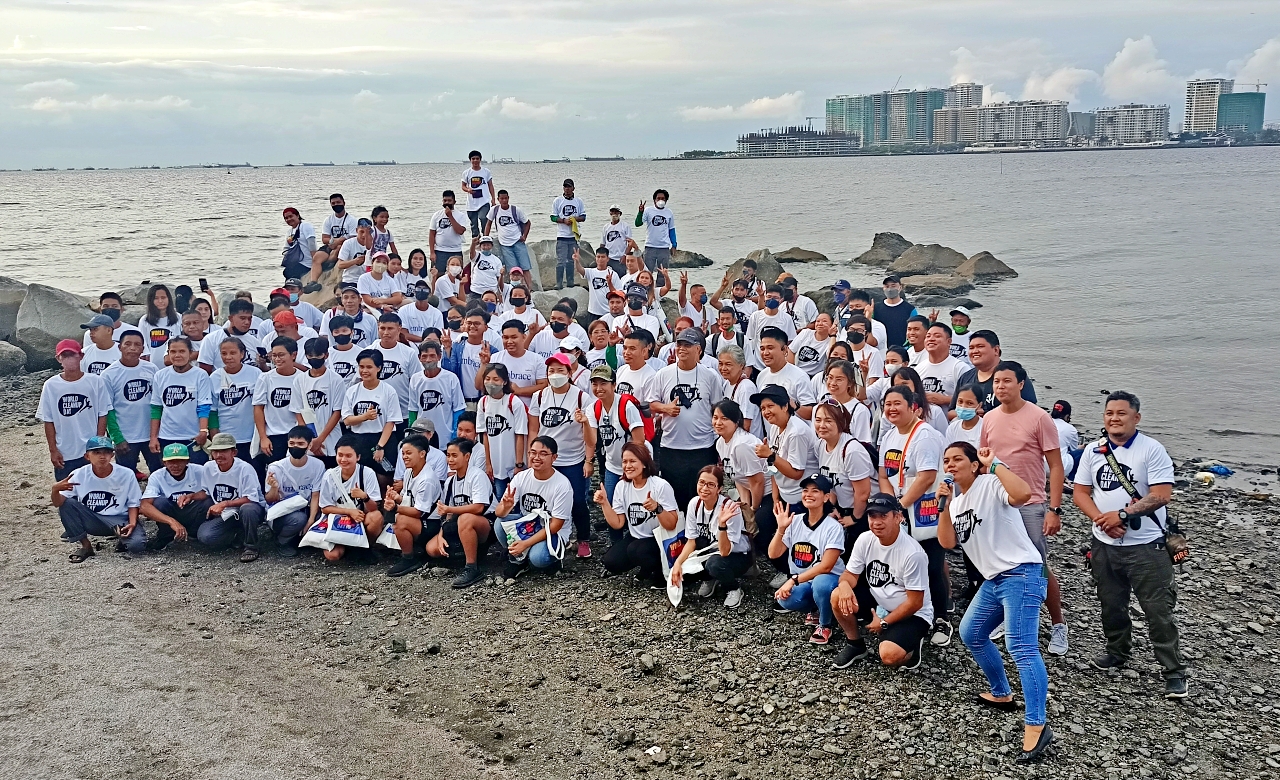
As volunteers swarmed shorelines across the country, I opted to join volunteers from Meaningful Travels PH, 2KK Tulong sa Kapwa Kapatid Foundation, 1Filipino Foundation, the Philippine Army's Civil-Military Operations Regiment, the Jaime V. Ongpin Foundation, KG-CERT, WeGen, and the CSR department of Philip Morris Philippines, in their coastal cleanup at LPPCHEA.

After we were briefed by Ann Marie Cunanan of Meaningful Travels PH on the process of the coastal cleanup, we volunteers, numbering almost a hundred, were grouped into fives and separated into two units with the first one heading straight to the shore for the cleanup while the other was taken on a tour of the mangroves to avoid overcrowding.

I was surprised by the expansive mangrove forest said to be home to around eight species of mangrove trees. A wooden boardwalk overgrown with mangroves, leading almost a kilometer to the other end of LPPCHEA, made up for a scenic and calming walk.

After our sightseeing, we wasted no time and made our way to the shoreline to do our part in cleaning up the garbage that washed ashore at LPPCHEA. Immediately, sacks and sacks got filled up with all kinds of trash: rubber slippers, plastic bottles and sachets, containers, rubber, pieces of wood, metal parts, and so on. Basically, almost all kinds of materials that floated on the waters of Manila Bay.

I estimated our afternoon's cleanup scooped a week’s worth of garbage swept ashore, thus requiring a coastal cleanup to be done frequently unless we collectively started addressing the underlying cause of the problem: improper waste disposal and management.

Dealing with the root of the problem might seem like an insurmountable effort for now, but as we came to realize, by simply focusing on our own consumption, we could make significant progress. We could all do our part to speed up the process of solving our trash problems by increasing our use of recyclable items and practicing proper rubbish disposal.

As the sun sank majestically beyond the horizon of Manila Bay, I looked around and saw a flight of birds flying overhead. Even though I was in a metropolitan city of over twenty million people, I was surrounded by verdant flora that made me feel like I was in the last natural frontier. The importance of LPPCHEA as a refuge for migrating birds and other species served as a gentle reminder to humans to take better care of Earth so that future generations would have a more pleasant and habitable planet to share with all its inhabitants.
Educational visits, especially for groups, were encouraged, but first, one needed to email them for assistance.


