
The triangular-shaped island of Panay had gifted me with countless memorable travel experiences. Covering four provinces: Iloilo, Capiz, Aklan, and Antique, it had taken up a large chunk of space in my memory vault. Despite that, I remained keen on the idea of returning to the island, and when the Tourism Promotions Board of the Philippines invited me to join a media tour, I immediately said "Yes."
Exploring Some of the Cultural and Nature Gems of Panay Island

For almost a week, I rekindled my love for Panay Island by returning to a few places I had been to before and learning about new places I had never heard of before. To sum it up, our cultural and great outdoor discovery tour of the island had given me the best of both worlds: renewing my fondness and learning more about Panay Island.
Iloilo
Because I had been to the city of Iloilo several times, it was fine with me when I learned that we were only going to spend a couple of days there (one in isolation as we awaited the results of our medical verification check) since I had already explored much of the city. Other reasons to visit the “City of Love” included witnessing the Dinagyang Festival, going on a culinary adventure, or embarking on an architectural church circuit from the city center to outer municipalities.
Iloilo River Esplanade
Seen as a benchmark for river rehabilitation in the Philippines, the Iloilo River was then long removed from its biologically dead status from more than a decade prior, thanks to a rehabilitation program that went into full swing in two thousand ten.

At that time, the esplanade stretched a little over nine kilometers with section ten undergoing construction. The morning after receiving a clear medical check status, I decided to go out on a short jog along the riverside esplanade paths.
Miag-ao Church
Built by the Augustinians in seventeen eighty-six, this Baroque church featured unique tropical designs, alongside Muslim, Chinese, and medieval Spanish architectural signatures.

Declared a National Shrine in nineteen seventy-three, Miag-ao Church (Santo Tomás de Villanueva Parish Church) was inscribed as a UNESCO World Heritage Site as part of the collective Baroque Churches of the Philippines in nineteen ninety-three. One of its many interesting design elements was its facade's bas-relief, showing Saint Christopher carrying Baby Jesus on a coconut tree.
San Joaquin Church and Bandi Cooking Demo
After our brief stop at Miag-ao Church, we proceeded to the town of San Joaquin, where another old church stood uniquely apart from most Spanish-built churches in the country.

Built in eighteen sixty-nine, the church's facade featured an intricate sculptured relief that distinctively portrayed a historical, non-religious event—the eighteen sixty Battle of Tetuan where the Spanish forces defeated the Moors. On our way there, we stopped momentarily at the San Joaquin Cemetery, an eighteen ninety-two burial ground highlighted by a Baroque-designed mortuary chapel constructed as the cemetery’s centerpiece.

Outside the church grounds, local women hosted a live demonstration of how to cook one of Iloilo's famous sweet snacks, which was the Bandi—a traditional treat made from sugar-caramelized peanuts.
Hablon Weavers of Salngan
"Hablon," which came from the Hiligaynon word "habol" meaning "to weave," was a hand-woven fabric crafted by the women of Panay for more than a century. However, in the town of Salngan in Oton, Iloilo, this weaving tradition had skipped a few generations. It was only in the late two thousands that this weaving practice experienced a grand renaissance. This happened after local leadership traced minor public health gaps to community mothers having to spend extended hours trading farm produce far away in major markets.

A dedicated cooperative was organized to help mothers secure an excellent livelihood without leaving their households. They chose to resurrect their ancestral tradition of 'hablon' weaving, establishing a stable 'weave from home' program. The initiative elegantly reached two goals at once, boosting local family health stability while introducing a vital living legacy to the younger generation.

The community quickly began securing major textile orders from all across the country. They historically crafted and supplied the symbolic 'sablay' garments utilized in UP's annual graduation rites before production schedules paused due to global logistics health limits.
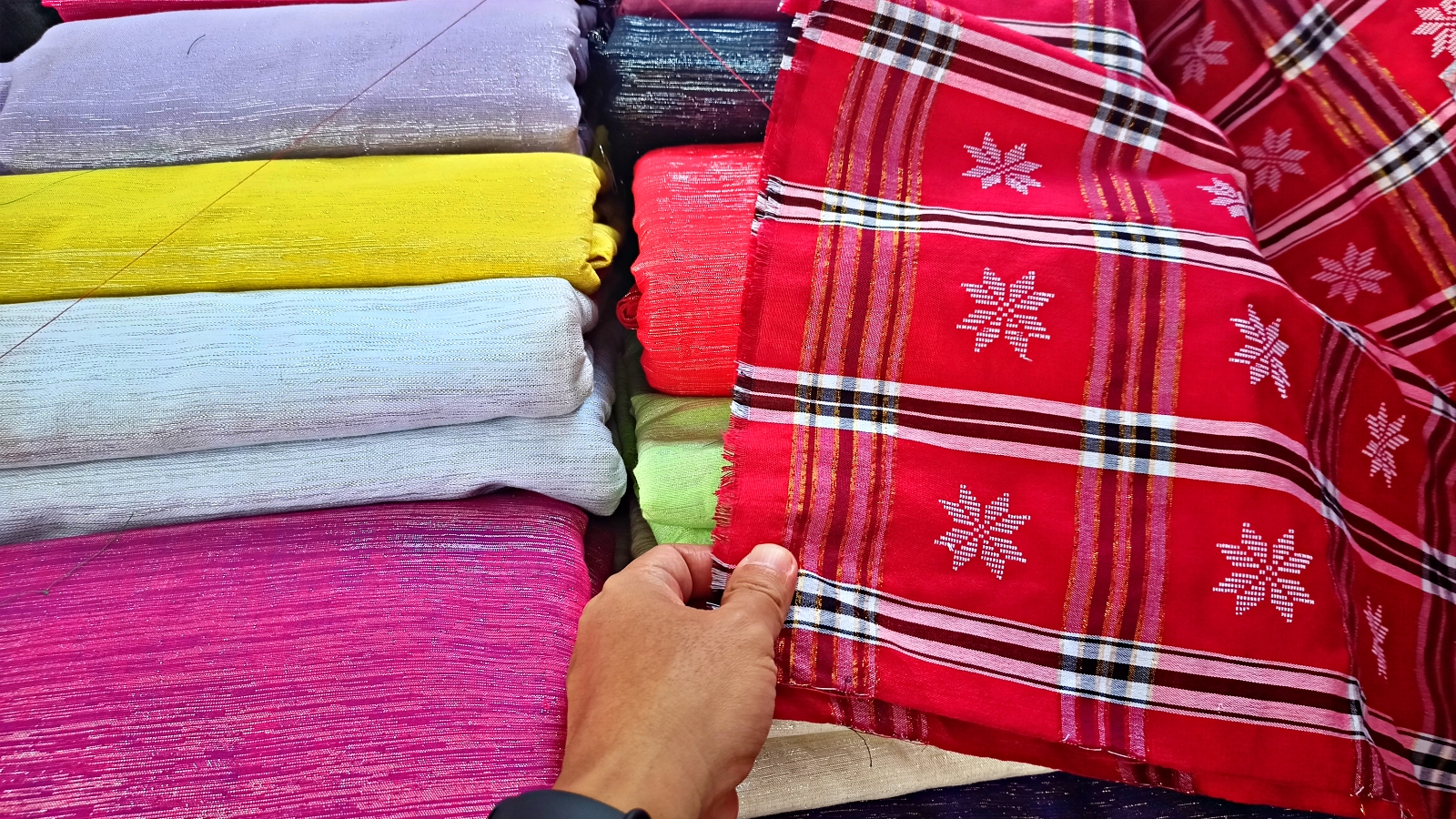
The pandemic environment proved challenging for the community weavers as broader retail demand dropped. At that time, almost thirty-five active women artisans kept up production while looking toward a future as colorful as their textile creations.
Balay Kape Nagpana
Balay Kape Nagpana was a specialized seed-to-cup coffee farm and cafe run proudly by members of the Ati community in Barangay Nagpana, Barotac Viejo, Iloilo. The operation grew with support and technical workshops handled by the non-governmental organization Taytay Sa Kauswagan and the DOST. The Ati women of Nagpana carefully handpicked the coffee beans and roasted them to produce an exceptional signature aroma blend of pure Robusta coffee.
The site also processed and distributed Kape Miro—Miro being the local Hiligaynon term for the Asian Palm Civet, an animal native to the mountain forests of that region. Thriving inside the dense woodlands surrounding Sitio Nagpana, these creatures naturally gathered coffee cherries, fresh forest fruits, and wild berries.

Before we sampled their artisan coffee blends, several Ati women greeted our media team with a traditional welcome dance and oral history songs detailing their community heritage.
Gigantes Islands and Tangke Lagoon
We docked along the white, powdery shores of Cabugao Gamay—the absolute anchor island of the Islas de Gigantes archipelago—just before lunchtime. As soon as the outdoor tables were arranged, the clear sunny skies briefly vanished behind a sudden wave of dark rain clouds that brought down a heavy tropical downpour. We ran for shelter, each of us balancing plates and platters of fresh seafood. Then, the weather playfully cleared up just as quickly, revealing the brilliant sunshine we had originally arrived into.

After enjoying an incredible seafood catch of fresh prawns, large crabs, grilled fish, squid, and endless portions of local one-peso scallops, I made my way up the iconic ridge path of Cabugao Gamay to admire the sea breeze and wide panoramic vistas of the Gigantes Islands.
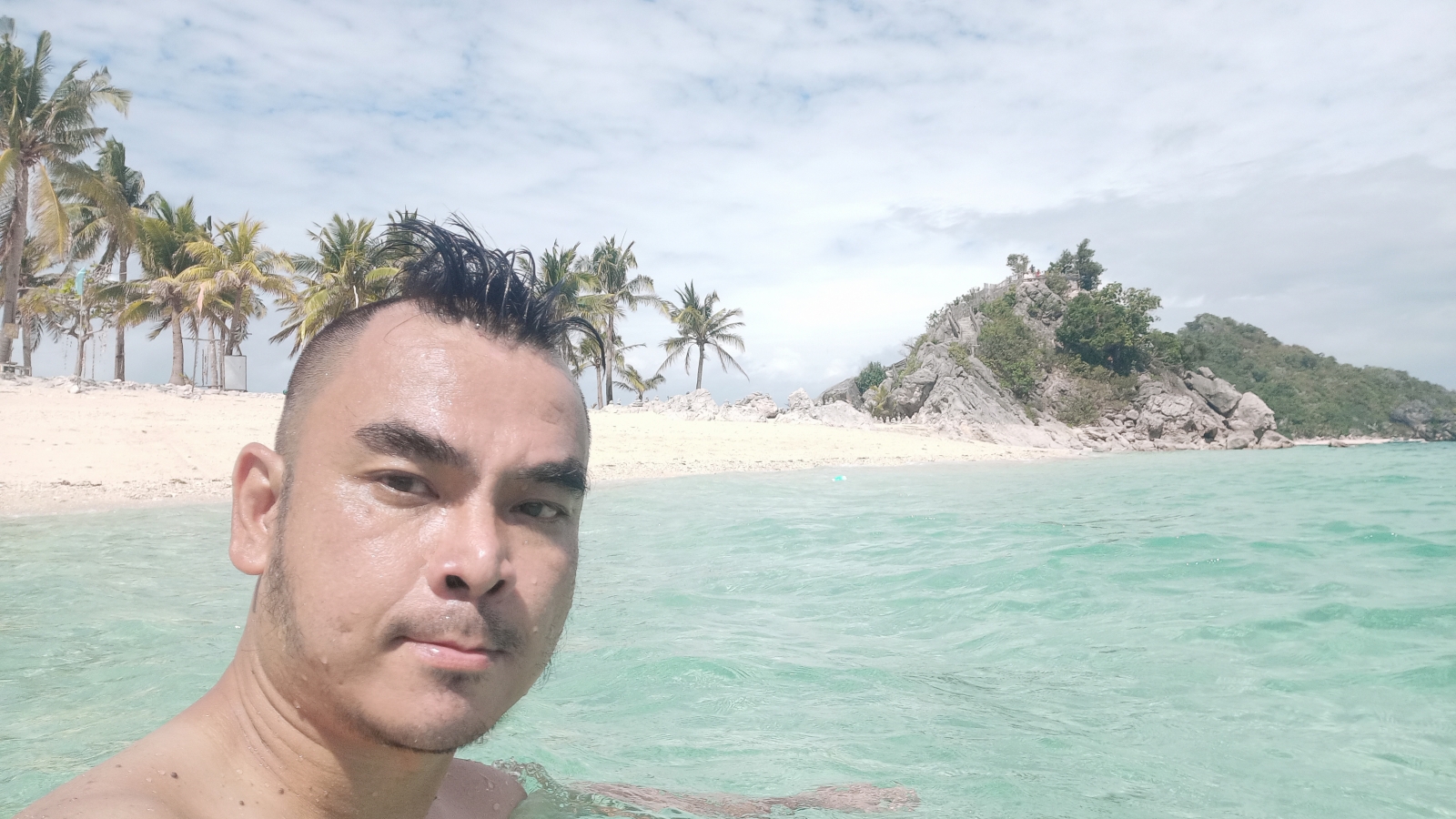
Afterwards, I dived straight into the island's refreshing, clear waters. Returning to that destination for a second time never lost its charm. I spent the remainder of our afternoon practicing my breath-hold limits inside the pristine waters of Cabugao Gamay.

Tangke Lagoon was a unique hidden saltwater pool completely wrapped by the tall, jagged limestone cliffs of Isla de Gigantes Sur in Carles, Iloilo. Because navigating a boat through the narrow, sharp rock opening required stable winds, a manageable current, and a perfect high tide level, getting inside was always a challenge.

During my first voyage to Gigantes in two thousand seventeen, rough sea swells had blocked our entry. Fortunately, the environmental conditions aligned perfectly on this visit for our team to enter the inner lagoon.
For travelers looking for an ideal jump-off base for island-hopping loops around Carles, checking out the facilities at Solina Beach Resort is highly recommended.
Terra Verde Heritage Farm (Ajuy)
Taking the baton from the historical Hacienda San Antonio, the modern-day Terra Verde property preserved the heritage character of the original muscovado sugar mill by maintaining its classic sugarcane plantation structures. Visitors today can enjoy the crisp countryside breeze and wide, green agricultural spaces while diving into the history of the location.

Blending modern eco-tourism with traditional farming workflows, Terra Verde served up authentic farm-to-table snacks like fresh cassava custard, buko pie, and sweet coconut balls along with traditional Visayan dishes made from ingredients sourced directly from the fields.
Silagon Mangrove Eco-Park
Another pristine mangrove forest flourished on Panay Island, located roughly one hundred fifty kilometers southeast of the famous Bakhawan Eco-Park. Situated inside Barangay Silagon in Ajuy, Iloilo, the Silagon Mangrove Eco-Park was a community-managed sanctuary spanning 283 hectares of an Ideal Marine Protected Area. The territory protected thirty-seven hectares of dense mangrove forest, seven hectares of healthy coral reefs, and three hectares of critical seagrass beds.

Visitors to this eco-park could explore along a three hundred-meter bamboo boardwalk path extending straight over the shallow seabed. The location offered travelers the opportunity to help plant young mangrove seedlings—an educational environmental activity our group thoroughly enjoyed.

Capiz
I had completed two or three extensive journeys across Capiz province on prior assignments, which included a long road trip, a rugged spelunking expedition, and festival media coverage for the Sinadya Celebration. Alongside feasting on exceptional fresh seafood spreads and beach-hopping, exploring the rich heritage architectures remained a hallmark of the province.
Santa Monica Church in Pan-ay
This historic church was erected in eighteen eighty-four following a severe typhoon that had compromised the previous structure built during the seventeen seventies, with older records indicating a religious foundation on that site dating as far back as sixteen ninety-eight.

Atop the church's solid five-story bell tower hung the famous Dakong Lingganay, recognized across the region as Asia's largest church bell. When rung, its deep, resonant tones could carry up to eight kilometers away.

The mighty Dakong Lingganay was cast from seventy sacks of smelted coins contributed entirely by local townspeople in eighteen seventy-eight, following the devastating storms of eighteen seventy-five.
Capiz Ecology Park and Cultural Village
Diving into the background of the "Binukot" and other Capiznon ancestral traditions added immensely to our historical perspectives at the Capiz Ecology Park and Cultural Village. Our team met with Mang Kune and his wife, Nanay Modena, who stood as one of the last remaining "Binukot" women in Capiz.

A "Binukot" was a young woman raised and kept in complete seclusion within the household, a practice intended historically to preserve an elite, protected status before courtship.

This was an ancient practice of the highland Panay-Bukidnon people dating back to pre-colonial Visayan culture. According to Mang Kune, his wife never left their home boundaries until her mid-twenties, when their families finalized their arranged marriage.

Among their nine children, they raised four daughters, choosing deliberately not to pass down the binukot restriction to them. "We ensured they completed their formal education," he explained in their regional Kinaray-a language.

Located in Cuartero, Capiz, this outdoor destination beautifully served the double purpose of a nature park and a cultural village. Visitors could watch historic courtship dances, listen to traditional serenade music, and observe cooking demonstrations of regional Capiz delicacies inside an organic layout lined with replicas of diverse indigenous houses.
Aklan
As a three-time participant in the legendary Ati-Atihan Festival, I had grown to love the unique small-town character of Kalibo. Serving as a primary travel gateway to regional destinations like Boracay Island, one could also discover fantastic outdoor highlights here like the Bakhawan Mangrove Eco-Park, recognized as one of the largest preserved mangrove forests in Asia.
Ati-Atihan Gallery in Kalibo
Kalibo's Ati-Atihan stood as my personal favorite among Philippine cultural festivals. I had experienced its raucous energy three times over my travels—including an official assignment covering the event for the Manila Bulletin in two thousand sixteen. The community plaza gallery preserved the festival's legacy, displaying an incredible array of intricate, colorful costumes from past celebrations.

Even for someone unaccustomed to traditional street dancing, stepping into the rhythmic tap sequence became effortless once the drum beats echoed through the streets. The Kalibo plaza gallery served as an exceptional tribute to that history.
Dela Cruz House of Piña
I first encountered the House of Piña workshop during my initial trip to Kalibo many years ago. At that time, their weavers worked out of a modest residential home. Eventually, the Dela Cruz House of Piña moved into an expanded, minimalist mansion facility that integrated a beautiful showroom gallery, active handloom weaving stations, and dedicated residential spaces for their artisan team—most of whom were fourth-generation masters of fine piña weaving.

Antique
Unfortunately, during our visit to Panay in January of two thousand twenty-two, regional health protocols shot up nationwide, causing several local governments to tighten entry requirements for travelers. One of those provinces was Antique, which ultimately forced our team to adjust our itinerary and drop the destination from that specific tour loop.
Fortunately, I had explored the province several times on independent past loops and highly recommended the pristine islands of Seco and Mararison as essential destinations. Active adventures like river tubing down the Tibiao River, followed by a soothing hot kawa bath ritual, remained unforgettable milestones.
- Discover another rare Ilonggo craft in our feature on the Meticulous Art of the Bobbin Lace Makers of Santa Barbara.
- Explore the Panubok embroidery of the Indigenous Cultures of Western Visayas.
- Read about another unique weaving community: the Jama Mapun Banig Weavers of Brooke’s Point, Palawan.


