
It made perfect sense that museums were housed in repurposed historic structures, as there was no better way of narrating the significance of the past than inside a building whose four walls hid heaps of stories to be told.
Museo Sorsogon: a former Prison turned Museum

Such was the case of the early nineteen hundreds-era Sorsogon Provincial Jail and Courthouse that was converted into Museo Sorsogon. The architecture of the original structure itself was already something to marvel at. When you combined its rich past with the contemporary curated art pieces and historical artifacts at the now Museo Sorsogon, every visitor received a triple dosage of learning.
A 2019 Retouch Retained the Building’s Character
After the inmates vacated the former Sorsogon Provincial Jail in two thousand nineteen when a new penitentiary was built, then Governor Chiz Escudero saw the potential of preserving the building’s impressive architecture.

As the building was updated to meet museum standards, certain elements of the old prison were preserved when they converted the space into different galleries, most notably the iron bars and graffiti walls painted by the inmates.

A short walking distance from the Sorsogon Provincial Capitol — itself a Neoclassical masterpiece from the early twentieth century — the whitewashed and refurbished Museo Sorsogon complemented the heritage look of the provincial compound.

Museo Sorsogon was curated by the National Historical Commission of the Philippines (NHCP) with the help of the province's Office of Tourism, Culture and Arts.
Rundown of Sorsogon’s History and Culture
Inside the two-story museum were ten galleries brimming with historical and cultural mementos, as well as reproduced items related to the province. All were displayed and presented in an eye-catching manner, giving visitors an easy walkthrough of Sorsogon's history.
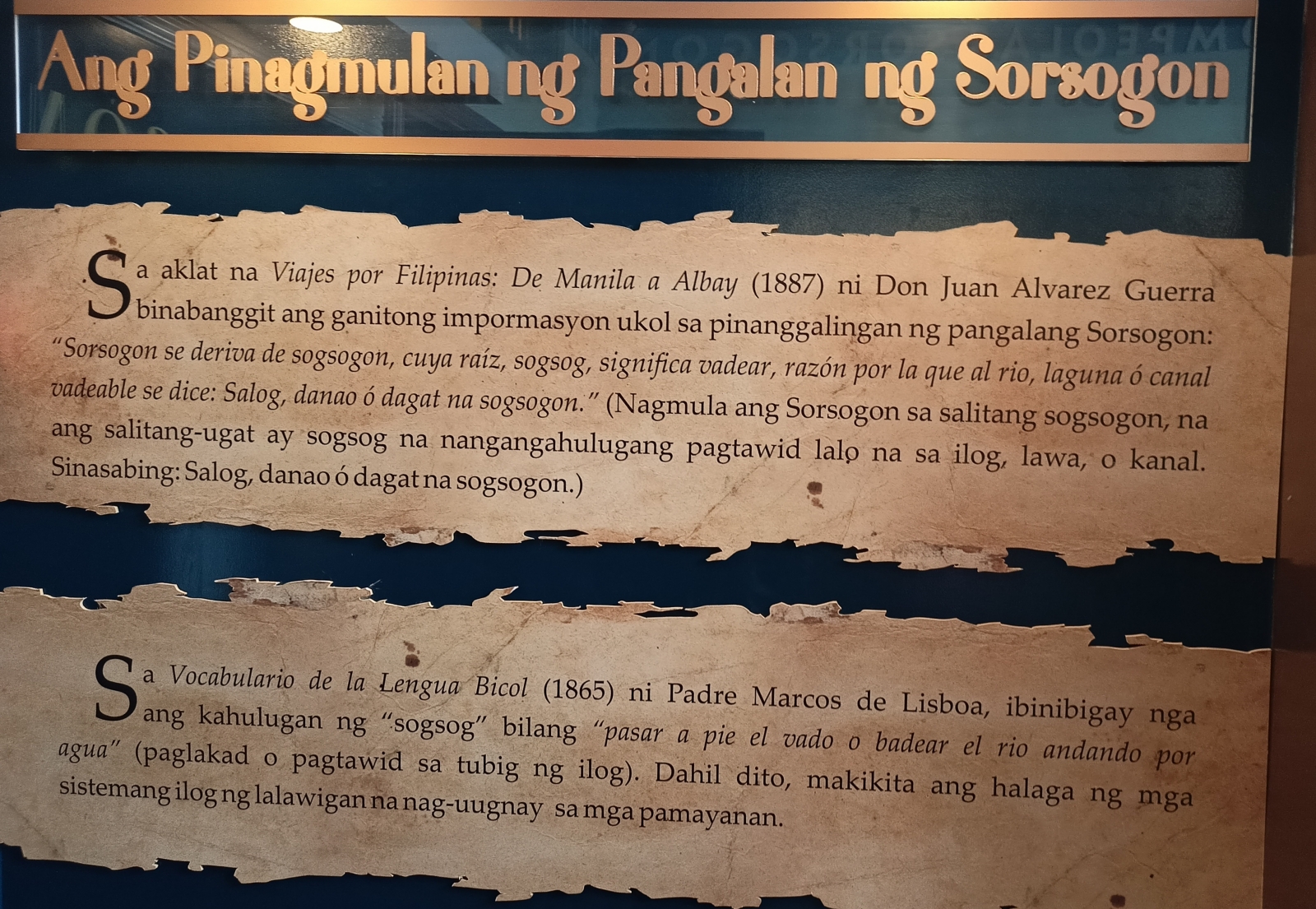
Each period of Sorsogon’s history was told through the museum’s collection, from the pre-Spanish rule to the province’s role in the eighteen ninety-six Philippine Revolution, the period preceding and succeeding World War II, and other cultural memorabilia unique to the region.

Apart from the museum’s many educational displays, what caught my eye was the painting of the Lady of Justice seen on a wall on the second floor. It was said to be done by the former prisoners themselves. Perhaps, the inmates' art expressed their collective plea for equality in lady justice's eye or a sense of revolt against authority, as shown by a portrait of revolutionary Che Guevara created by members of the Sputnik gang — a dreaded group immortalized in Philippine cinema’s action genre.

Outside the second floor, visitors could enjoy a gasp of fresh air, just as the former inmates did on their daily sixty-minute allotted outside exercise, in the more than eight hundred-square meter open-air amphitheater now doubling as an events space.
Museo Sorsogon's journey from its origins as a place where the hands of justice kept its prisoners, to its current state as the new generation of Sorsoganons' window to the past, was a poignant testament to the province's reverence for its storied years.

As I walked out of the building, my mind wandered to an imagined past where the clatter of inmates banging tin cups against the iron railings of their cells resounded through the old structure. I paused and realized how that must have been a terrifying and thrilling scene. Bringing my mind back to present time, I understood that the Old Sorsogon Provincial Jail was never more. Where I just stepped out was now the Museo Sorsogon, a place that exuded an atmosphere of peace and serenity. One that was replete with fascinating anecdotes about Sorsogon and its people.

Practical Travel Guide
Visiting Museo Sorsogon:
Located along the Capitol Complex in Sorsogon City, Museo Sorsogon is open to the public from Tuesday through Sunday (8:30 AM to 5:00 PM). It is easily accessible via a short tricycle ride from any point in downtown Sorsogon City.
Explore More of Sorsogon:
For a complete guide on exploring the rest of the province, check out our comprehensive Sorsogon Travel Guide.
- Read our overview article: Sorsogon: Beyond the Gentle Giants.
- Plan your full itinerary with our Sorsogon Travel Guide.
- Discover more historic sites across Sorsogon and Exciting Bicol.


