Stop and Smell the Flowers at Northern Blossom Farm | Atok, Benguet

November 28, 2020
Explore Northern Blossom Farm in Atok, Benguet. A journey of post-lockdown introspection amidst 3 hectares of blooming flowers, mountain fog, and the sweeping views of the Cordillera ranges. Discover the sustainable beauty of Matthiola and Cabbage Roses.
Philippines / Benguet / Nature

Stop and Smell the Flowers at Northern Blossom Farm | Atok, Benguet

By Marky Ramone Go November 2020

On a normal day I would be displeased dragging my body out of bed at 4 am especially after sleeping soundly in the Manor at Camp John Hay. Not this particular morning though. The reason being the destination we’re going would give me an opportunity to literally and figuratively pause and smell the flowers. Being able to travel for the first time since the March 2020 lockdown, the trip to Northern Blossom Farm in Atok, Benguet opens a door to rekindling my love affair with traveling — with precious moments of introspection to boot — in the company of the great outdoors.

Northern Blossom Farm Morning Glow
The first light over the flower fields of Atok

Our land journey from Baguio City took more than an hour and a half and we arrive in perfect time just as the skies starts to glow from the early rays of the rising sun. As we alight from our respective vans, we were met by the farm’s owner Mrs. Ganayan who briefed us about the developments in their property.
Melissa Ferrer at Northern Blossom
Misty mornings in the Benguet highlands

“During the height of the pandemic, we briefly stopped planting flowers because market demand became less and less. We just started replanting a month ago so now we’re just seeing the first set of blooms. Ordinarily, before the pandemic, at this time of the year, you’d see more variety of blooming flowers”, she told us in Tagalog.

Levy Amosin and Celine Murillo

As travel restrictions starts to ease up, Mrs. Ganayan hope to welcome back visitors who have made Northern Blossom Farm a popular tourist stop in Benguet by serving as a side trip destination of those traveling to Baguio.

Ariadne Jolejole at Atok

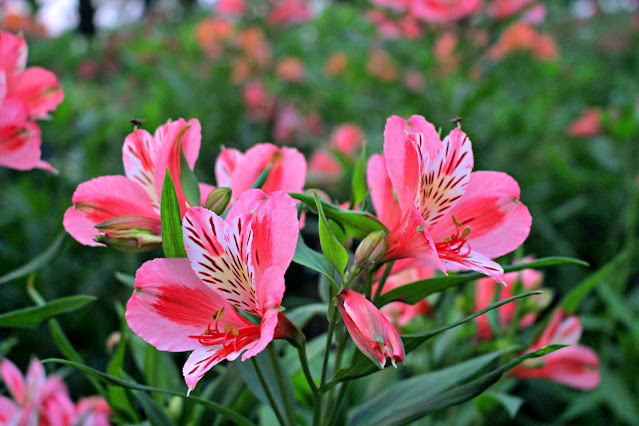
Northern Blossom Farm spreads over a 3-hectare hilltop land overlooking the scenic mountainside of Atok, Benguet. Being here, one can’t help but regale at the sweeping scenery of colorful flowers that bloom all year-round.

Ayi Del Rosario Floral View
Vivid colors cutting through the mountain mist

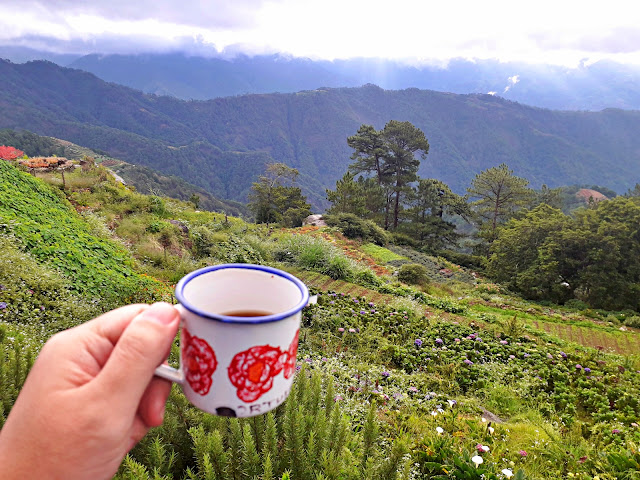
Different variety of flowers such as matthiola, rice flower, larkspurs, snapdragons, cabbage roses and more, are harvested here and reaches the many flower shops in Metro Manila to as far away as Mindanao. A few homestays are now accepting guests while a small café located within the farm offers sweeping view of the mountain ranges of Cordillera—you can even see the peaks of Mt. Pulag and Mt. Timbak on a clear day.
Baguio Travel Guide Benguet

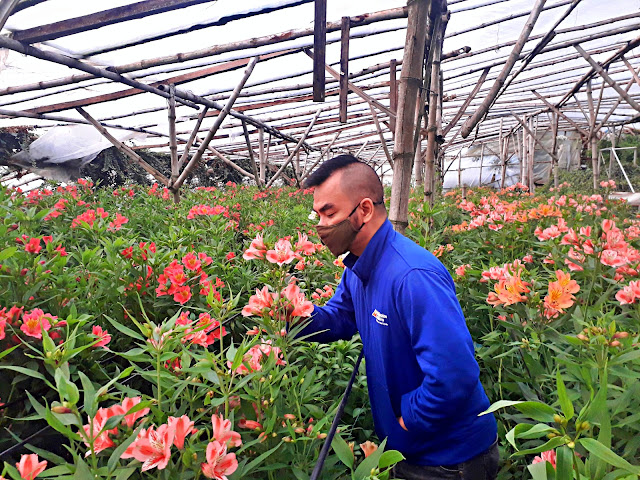
Wasting no time, we hurried down a few steps into the view deck that leads to the wide flower fields and the magical scenery of the mountain ranges of Cordillera. As I alight out in the open coming from one of the greenhouses, I breathe thick fog and wide-eyed stared into the beautiful scenery unfolding. Slowly, I see the vivid colors of the different flowers blending with the seeping sunlight begins to glow.
Marky Ramone Go Atok Benguet
A literal pause to smell the flowers

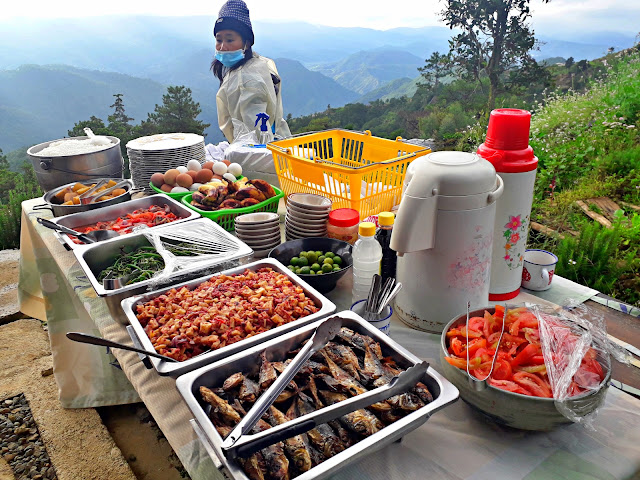
I inch closer to a few ones and edge my nose behind to smell the flowers’ perfume-like scent — while evading a couple of bees in the process. After a moment of sentimentality at finally having the chance to be in the company of wonderful nature, I joined the rest of our group to feast on a hearty breakfast served by our hosts.
Sophie and Koryn Breakfast
Fresh Cordillera produce for breakfast

Fried fish, sautéed and steamed vegetables that feels so fresh as if it was just picked that morning, filled my plate along with a cup of brewed coffee made from beans harvested in Benguet fueled me that morning.
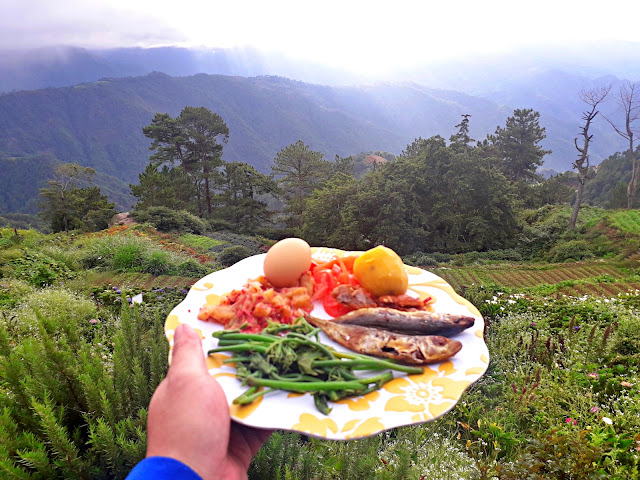
Charisse Vilchez Northern Blossom

After several months of being holed up at home only going out to buy essential items, this return trip of mine to the Cordillera region and at Northern Blossom Flower farm, has given me the required break I badly needed.
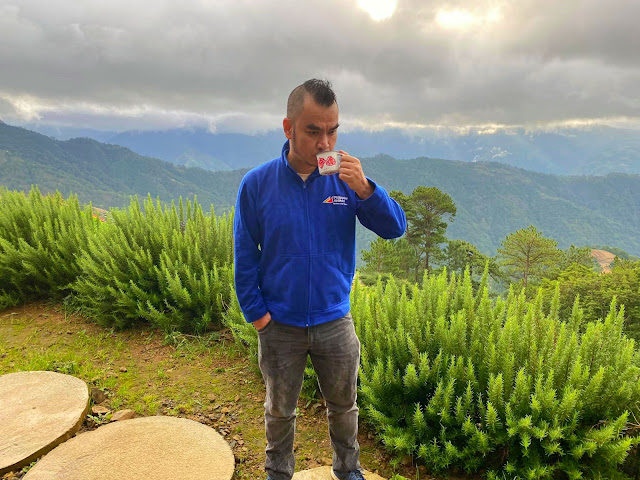
Marky Ramone Go Portrait

While it remains to be seen how long we must battle this Covid-19 pandemic, this day that I finally got to pause and smell the flowers (despite being reminded of that sad scene from The Walking Dead), has given me hope that the end of the pandemic is just around the bend.

Find Yourself in the Cordilleras: The Farming Communities of Benguet and Mountain Province

November 23, 2020
A comprehensive farm-hopping guide to Benguet and Mountain Province. Explore Northern Blossom Flower Farm in Atok, the vegetable terraces of Buguias and Paoay, the diverse organic farms of Bauko, and the turmeric fields of Tadian. Discover the heart of Cordillera agriculture.
Luzon / Cordillera / Agritourism

Find Yourself in the Cordilleras: The Farming Communities of Benguet and Mountain Province

By Marky Ramone Go November 2020

Home to a magnificent set of picturesque highland countryside, the region of the Cordillera features an abundance of wonders. From its cool weather all year long to its majestic set of nature, fascinating culture and mouth-watering local cuisine, an all too familiar feature of the region is gaining much needed attention today. These are the fruit and vegetable farms of Benguet and Mountain Province.

Highland Farming Bauko Mountain Province
Farming in Benguet and Mountain Province

Spread across the intertwining mountains of the two provinces, are colorful fields of blooming flowers, lush green vegetables and seasonal fruits best typifying the ingenuity and hard work of the farmers of the Cordillera.

Benguet Mountain Terrace Farming
Benguet farming

As the growing movement of choosing healthier food options such as farm-to-table expands, visiting these farms will also give us an opportunity to show gratitude to our farmers by including their source of livelihood as a vital element of the tourism industry.

Mountain Province Landscapes
Strawberries are forever

To help you plan your farm-hopping trip to Benguet and the Mountain Province, here are some farming communities you can visit.

Northern Blossom Flower Farm in Atok, Benguet

This 3-hectare farm that spreads over the scenic mountainside of Atok, Benguet, is where one can regale at the sweeping scenery of colorful flowers that bloom all year-round.

Northern Blossoms Flower Farm Atok
Northern Blossoms Farm in Benguet

Different variety of flowers such as matthiola, rice flower, larkspurs, snapdragons, cabbage roses and more, are harvested here and reaches the many flower shops of Metro Manila to as far away as Mindanao. Owned by Mrs. Melany Ganayan and her husband, Northern Blossom Flower Farm has embraced its ‘rock star of all flower farms’ status by welcoming visitors who wanted to stop by to snap some photographs as well as to pluck and buy some flowers.

Flower Harvesting Atok Benguet

A few homestays are now operating near the farm while a small café located within the farm offering a sweeping view of the farm and the mountain ranges of Cordillera—you can even see the peaks of Mt. Pulag and Mt. Timbak on a clear day—is set to open soon.

Buguias, Benguet

The town of Buguias is said to be among the top vegetable producers in the country and where 80% of the town’s more than 40,000 population are farmers. Farms spanning throughout the mountains and plains of the town are covered with lush vegetation consisting of almost every vegetable you can name. From chopsuey ingredients (potatoes, carrots, broccolis, lettuce, pechay etc.) to beans, eggplants, okra, sayote, and even strawberries, one can visit the vegetable farms here and easily fill up a truck of fresh produce.

Buguias Benguet Vegetable Farms
The vegetable capital of Benguet

Other interesting places to visit in Buguias are the Veteran Memorial Marker which marks the liberation of the town from the Japanese Imperial Army on July 27, 1945 and the World War II 66th Infantry Shrine along Halsema Highway. The town of Buguias is also the site of a 12th century burial site that includes the mummified remains of Apo Anno—who was believed to have been originally buried in the 16th century.

Paoay, Benguet

Another easy to access farm—by Benguet standards—are the vegetable farms in the town of Paoay, Benguet. Aside from buying fresh produce and various succulent and snake plants from the farmers here, you can proceed on foot to nearby Bosleng Lourdes Grotto found sheltered under a huge boulder on stony peak surrounded by vegetable plantations.

Bosleng Lourdes Grotto Paoay
The Instagrammable Rock at Bosleng Lourdes Grotto

A few steps from the grotto, you can find a protruding rock that offer magnificent view of the surrounding mountains and on a good day, a sea of clouds.

Bauko, Mountain Province

Benguet's neighboring province Mountain Province is also dotted with lush vegetable and fruit farms. With an elevation rising above 4,100 feet above sea level, the topography of the mountain range on this part of the Cordilleras is perfect for planting and harvesting fresh yield.

Mountain Province Farmers
Here, catch

In the town of Bauko, one can visit one farm after the other from potato farms to lettuce farms to strawberry, kale, pepper just to name a few. This is also an idyllic place to learn more agriculture from the local farmers themselves, as they are very friendly and accommodating in answering all your questions regarding their own farming techniques. Plus, you can always buy a few kilos of freshly harvested farm goods from them afterward.

Potato Farms Bauko
Potato farms in Mountain Province

Tadian, Mountain Province

Half an hour from Bauko, in the town of Tadian, one can find another lush farm but this time laden with turmeric and ginger plants which the farmers—comprising mostly of local mothers—harvest to produce ginger and turmeric tea. With the help of a social enterprise called the Local Goodness PH, the farmers here are now planting and harvesting an increased production of turmeric and ginger because they are now able to market it directly to consumers in Metro Manila.

Mother Farmers of Tadian
The mother farmers in Tadian

"Today, after the Local Goodness started taking orders for is, it motivated us to keep planting turmeric and ginger. Turmeric farming isn't easy because it takes almost a year to cultivate it. With the help of the Local Goodness we cannot stop now" said one of the mother farmers Theresa Farnican.

.

Where to stay in Baguio | The Manor at Camp John Hay

November 14, 2020


Fresh from binge watching “The Haunting of Bly Manor” a week prior, its understandable why I initially likened the feel of the Manor Hotel to the haunted series’ mansion. Take out the strange ghostly apparition and you’ll see a charming property laden with fancy landscaping and fascinating architectural patterns.


Sophie Gianan

Ancient Cham Ruins at My Son Sanctuary | Vietnam

November 08, 2020
Explore the Mỹ Sơn Sanctuary in Central Vietnam, a UNESCO World Heritage site. Discover the ancient Hindu temple complex of the Champa Kingdom, its fascinating history of resilience through the Vietnam War, and the tranquil ferry journey along the Thu Bon River.
Vietnam / Southeast Asia

Ancient Cham Ruins at My Son Sanctuary

By Marky Ramone Go November 2020

Waking up to a rainy and foggy morning had me entertaining the idea of staying in until lunch curled up on my bed. Appealing the thought may be, the chance to see another UNESCO World Heritage Site reigned over and proved to be enough of a motivation to make me stand up, stretch my hands and face the window announcing to myself “Good Morning Vietnam

My Son Sanctuary Ruins Vietnam
Mỹ Sơn: The foremost Hindu temple complex in Vietnam

After loading up for breakfast with omelet, Bahn-mi sandwich and Pho noodles, I waited for the tour bus—which the staff from the travel agency told me the day before “No need to go here, bus come to you and take you to My Son”

I originally planned to go to My Son on a DIY thinking it would be cheaper, but guess what? After passing by a few travel agencies located near the ancient city of Hoi-An, I realized it is much cheaper to avail of a tour package. I paid 500,000 VND ($20.00) for a guided day-tour of My Son that includes a bus ride going to My Son, the entrance fee, a bottled water, lunch and a ferry ride going back to Hoi-An.

My Son Sanctuary

It was raining hard when our bus reached the My Son complex. Not wanting to risk my camera, I settled with using my mobile phone to photograph the place. Each of us were given a plastic raincoat by our guide so exploring the compound never became much of a hassle—other than the muddy trail.

Exploring My Son Sanctuary in the rain
Exploring the mud-slicked trails of history

The Mỹ Sơn temple complex is regarded as one of the foremost Hindu temple complexes in Southeast Asia and the only heritage site of this nature in Vietnam. It is often compared with other cluster of historical temples in Southeast Asia, such as Borobudur of Java in Indonesia, Angkor Wat of Cambodia, Bagan of Myanmar and Ayutthaya of Thailand. As of 1999, My Son has been recognized by UNESCO as a world heritage site. At its 23rd meeting, UNESCO accorded Mỹ Sơn this recognition “pursuant to its criterion C (II), as an example of evolution and change in culture, and pursuant to its criterion C (III), as evidence of an Asian civilization which is now extinct”.

Champa Kingdom architectural details
Heritage etched in brick and stone

My Son Sanctuary is believed to date back to the 4th century until the 14th century. It was built by the kingdom of Champa (yes, earlier than the Khmer Empire's Angkor Wat) as a sanctuary for the Hindi faithful and was constructed to honor the God Shiva, also known as Bhadreshvara.

The My Son Complex is a whole lot smaller than Angkor Wat, Ayutthaya, Sukhothai and other ancient temple ruins in Southeast Asia. If you have been to some, do not compare otherwise you will be disappointed. The history of of this place though—as told by our local guide—is as fascinating as the other UNESCO sites I visited.

Central Vietnam mountain range ruins
Temples nestled between two Central Vietnam mountain ranges

My Son is situated in the village of Duy Phu and a little more than an hour from Hoi An, in the Quang Nam Province in Central Vietnam. The temples here are scattered covering an area of two kilometers wide sandwiched by two mountain ranges.

It was also the location of several religious ceremonies for the rulers of the Champa dynasties—as well as the burial sites for Cham royal leaders and heroes. During the height of the Cham presence in My Son, the collection of temples and other historical structures here, reached more than 70.

Hindu Temples Ruined Twice Over

Even though much of the remaining structures have survived all the elements of nature the last 1,300 years (the original bricks and stones have outlasted the ones added through conservation works), much of the ruins rediscovered in the late 19th century—unfortunately—barely escaped the wrath of the US carpet bombing during the Vietnam War. Two main temples were totally reduced to a pile of rubble while countless ones were heavily destroyed.

Bombing remains at My Son Sanctuary
Witnessing the scars of the 20th century

Even before the Vietnam War, My Son was also ransacked during the French Occupation. A head of an important God statue was believed to have been taken by the French and is now displayed at the Louvre Museum. "We wanted to have it back, but the French always gives us an answer of no" narrates our guide.

Marky Ramone Go at My Son
Walking through the shadows of an extinct civilization

We took a different route on the way back to Hoi-An by ditching the bus in favor of a small ferry, to savor the tranquil waters of Thu Bon River. The ride lasted an hour and along the way, I regale at the sight of fishing village life bursting with simplicity from the banks of the river. That moment, I realized why the Cham dynasty settled and thrived in My Son, as robust waterways always plays a crucial role in the survival of any civilization.

As the weather cleared up to reveal a bright sky, I walked to the back of the boat and stared at the calm and murky waters, wondering the sheer amount of history that ebbed and flowed along its torrent.

Sun Dialing the Skies at Jantar Mantar in Jaipur | India

October 25, 2020
Explore Jantar Mantar in Jaipur, a UNESCO World Heritage site featuring the world's largest stone sundial. Discover the architectural astronomical instruments of Maharaja Sawai Jai Singh II and the fascinating intersection of Ptolemaic astronomy and Rajput history.
India / Jaipur

Sun Dialing the Skies at Jantar Mantar in Jaipur

By Marky Ramone Go October 2020

Situated within the old city of Jaipur near the City Palace and Hawa Mahal is the UNESCO World Heritage Site of Jantar Mantar. Named after the words "yantra", which in Sanskrit means "instrument", and "mantrana" meaning "to calculate", the Jantar Mantar is an equinoctial sundial that measures the time of the day and the declination of the sun and the rest of the celestial sphere.

Jantar Mantar Jaipur Instruments
The architectural precision of 18th-century Jaipur

There are five Jantar Mantars built all over India during early 18th century—four of it remains to this day—with the one in Jaipur housing the world's biggest stone sundial. A total of 19 architectural astronomical instruments was placed inside the Jantar Mantar complex in Jaipur during its construction from 1728 to 1738 under the reign of Rajput Maharaja Sawai Jai Singh II.

Astronomical structures Jaipur
A collection of 19 precision instruments

When the main observatory of the heavenly bodies was transferred from Delhi to Jaipur, the number of astronomers who worked at this site peaked to 23. It continued to become the Rajput Kingdom's main observatory until the death of Singh II in 1743.

Jaipur UNESCO World Heritage
Exploring the world’s largest stone sundial complex

Of the four existing Jantar Mantars in Jaipur, Delhi, Varanasi, New Ujjain, this site is considered as among the most prominent because it has the most number of instruments and the world’s largest sundial.

Ptolemaic positional astronomy Jaipur
Measuring celestial positions with geometric structural art

Each of the structural planetary instruments measures celestial positions using the method of “Ptolemaic positional astronomy" used by many older civilizations. It used to supply accurate readings before towering modern buildings blocked the view of the nighttime sky.

Vrihat Smarat Yantra: The World's Biggest Sundial

Occupying the center spot of the Jantar Mantar is a sundial and its gigantic gnomon standing 90 feet high. The "gnomon" is part of a sundial that provides measurement of the sun's position through the shadow it casts.

Vrihat Smarat Yantra Sundial
A shadow that tracks time in two-second intervals

The Vrihat Smarat Yantra is said to measure time in intervals of a couple of seconds using the shadow casted by the gnomon from the sunlight.

Walking around the Jantar Mantar compound in Jaipur is like being inside a museum where astronomical instruments are displayed. Only in this case, each apparatus appears in a variety of architectural structural forms, each having their own interesting patterns and designs intricately thought out to match the movements of stellar objects in the sky.

Laghu Smarat Yantra Ramp
The Laghu Smarat Yantra ramp pointed toward the North Pole

Some of the architectural planetary devices that arrested my attention the most are the Laghu Smarat Yantra, which is appear like a stair but is actually a ramp pointed towards the North Pole used to calculate time up to the accuracy of 20 seconds.

Ram Yantra Wheel
Ram Yantra: Measuring azimuth and elevation

Then there's the Ram Yantra, which is like a giant wheel lying on the ground surrounded by pillars in circular formation. It is used to measure the azimuth and elevation of the sun and other planets.

Nadivalaya Yantra Sundials
Standing before the dual sundials of Nadivalaya Yantra

On the photo below, I am shown standing in front of the Nadivalaya Yantra, a structure composed of two sundials facing the south and north hemispheres. It is used to measure time up to an accuracy of less than one minute.

Marky Ramone Go Jantar Mantar
A new kind of learning in the Pink City

Another interesting instrument is the Jaya Prakash Yantra. It is a hemispherical bowls made of marble slabs used to measure positions of heavenly bodies by the hour.

Jaya Prakash Yantra
Geometric bowls tracking the celestial sphere

Just to name a few, each instrument provided me with a new kind of learning and understanding of ancient astronomy and its practitioners who despite without the use of modern equipment, have managed to come up with a more thought-provoking way of studying and measuring the inter-stellar objects in the sky.

Jaipur Heritage Scene
A thought-provoking journey into the sky

A Travel Guide to Calayan Island in Northern Philippines

October 20, 2020
Part of the isolated cluster of Babuyanes Islands, this offbeat Island boasts of a bounteous set of rugged nature. Explore Calayan Island, Cibang Cove, Nagudungan Hill, and more.
Philippines / Calayan Islands / Travel Guides

Calayan Island Travel Guide: A Secluded Retreat

By Marky Ramone Go October 2010

Part of the isolated cluster of Babuyanes Islands, this offbeat Island boasts of a bounteous set of rugged nature.

Despite living in an archipelago boasting some of the finest beaches and islands in the world, I still find myself dropping my jaw at a sight of a marvelous island setting. Such is the effect Calayan Island had on me the moment I first laid eyes on it. As the only municipality among the group of Islands of Babuyan—a cluster of pristine isles situated several miles off the northern tip of Luzon, Calayan appears so remote and full of raw beauty.

Celine Murillo
Marky Ramone Go

This island has remained secluded for the longest time that it only opened a small airport early this year—that only accepts small chartered flights. Going to the island requires travelers to brave the mighty waves of the merging Philippine and South China Seas, aboard a lampitaw—a medium sized local motorized boat, for seven hours.

Nagudungan Hill
Calayan Island Travel Guide

During my first journey to the island, I remember experiencing cramping legs brought about by steadily sitting on a singular position for hours. While a protruding piece of wood continues to make me uncomfortable, giant waves the size of trucks batters our boat to no end. Just when I expect the worst—such as sinking below the ocean—we finally sailed over a steadier body of water where the waves gradually decreased in size.

Mishi Magno
Nagudungan Hill Calayan Island

A few moments after, I heard exuberant yells from the passengers as they point out to the sea. I followed their directions and there it was a dozen humpback whales darting in and out of the water as if trying to entertain us. That moment, I realized my trip to Calayan Island has the makings of a truly epic trip.

Introducing the Many Wonderful Sights of Calayan Island

Measuring 494.53 square kilometers and inhabited only by less than 17,000 people, Calayan Island is composed mainly of rolling hills, jagged cliffs and long white sandy shores—making it an ideal place to experience real island living.

Calayan Island Travel Guide

Cibang Cove

After exploring much of the Philippines' most beautiful beaches, I honestly declare that Cibang Cove easily cracks my top three. The long stretch of the cove appears breathtakingly before my eyes. With nature’s colors mixing perfectly around me: the blue colored skies, the indigo waters of the ocean, the emerald forested cliffs—all of it constituting a postcard-like image.

Levy Amosin
Cibang Cove Calayan Island

Nagudungan Hill

Adjacent to Cibang Cove, this hill can be easily scaled in under 15 minutes. It has a lighthouse perched on top of it and gives you a jaw-dropping 360-degree view of the island's surroundings. Time your visit here to catch the sunset.

Monnette Santillan
Nagudungan Hill Calayan Island

Kababaan Beach

A little further by boat from Cibang Cove, another secluded beach fringed by tall coconut trees can be found. Spending mornings or early afternoon here is a great way to just get lost with nature. Swim with precautions as the waves and current can become quite strong. Otherwise, this is another place in the island great for lounging under the sun.

Moha Barakat
Calayan Island Kababaan Beach

Lusok Cave

Its a cave that opens out into the ocean. Inside, one can find a natural pool filled with crystal clear water--a mixture of fresh water dripping from the walls of the cave and salt water of the ocean. Spend an hour or two here making splashes by diving from the rock formations will truly satisfy your sense of adventure.

Kristina Caburao
Marky Ramone Go

Bataraw and Caanawan Waterfalls

Aside from the stunning beaches and mesmerizing caves with natural pools, the hills of Calayan Island also hides several waterfalls—two of which can easily be reached via short treks. The waterfalls of Bataraw and Caanawan are also ideal side trips for those wanting to experience an extra dose of Calayan's great outdoors.

How to Get Here

The Jump-Off Point:
The town of Claveria, Cagayan located in the northern tip of Luzon island, is the usual jump-off going to Calayan Island. Here, travelers board the lampitaw (the motorized boat) at Taggat Port for a 5-7-hour sea journey. Boat fare ranges from 550 pesos to 650 pesos ($11-$13) per passenger one-way.

Manila to Claveria (By Land):
Take a bus from Manila (commonly the Florida Bus Line) for a 12-14-hour land journey. Fare ranges from 800 pesos - 900 pesos ($16-$18) per passenger one-way.

Manila to Claveria (By Air):
A faster option is to take a flight from Manila to Laoag in Ilocos Sur. Commercial planes such as Air Swift, Sky Pasada, Philippine Airlines and Cebu Pacific flies to Laoag from Manila for an hour of flight time. From Laoag to Claveria, travelers will then take another 3-hour land journey.

Direct Flight Option:
Since Calayan Island has opened a small airport, small chartered flights are now available—although this can prove pricey for the ordinary travelers. The local government of Calayan meanwhile, has assured that commercial flights involving small airlines will soon fly to Calayan Island from Clark, Pampanga and Laoag, Ilocos Sur.

What to Eat

Like any typical coastal towns in the Philippines, fresh seafood abounds in Calayan Island. Unlike in most seaside villages though, giant crabs known locally as “curacha” and gigantic lobsters are caught aplenty in the waters surrounding the island—making it cost a lot cheaper here compared to other fishing communities. It came as no surprise that most meals I had here consisted of a feast of a variety of seafoods.

Valian Urag
What to eat in Calayan Island

Where to Stay

Another great thing about Calayan Island is that there are no fancy resorts—something the local government plans to keep it as it is. Here are the few places to stay in the island.

Nestle Guttierez
Apollo Beach Resort Calayan
Island Directory

Local Accommodations

Apollo Beach Resort
  • Rate: 500 pesos / night
  • Phone: 63947-8939619 / 63999-7151283
TPS Homestay
  • Rate: 250 pesos per bed
  • Phone: +63939-9158667
Villa Innocencia Inn
  • Rate: 700 pesos / night for 3 persons
  • Phone: 63949-6001931
Pagdagusan Homestay
Rate: 250 pesos per person
Phone: 63998-5100621

Transportation

Transportation within the island is by motorcycles—which the locals call here as “habal-habal” and the “Kuliglig” which is a makeshift tractor that can sit 4-6 people. Normal fare starts at 10 pesos per person.

Tisha Colibao
Kuliglig in Calayan Island

Essential Island Contacts & Information

Local Contacts

Wakay Tours • Contact: Facebook Page
James Tan Singun (Local Tour Guide) • +63948-1142620
Fred Ubasa (Local Tour Guide) • +63995-01671188
Calayan Coast Guard • +63999-9243554

Currency

There are no ATMs and Banks yet in Calayan Island, so make sure to bring just enough cash for food, accommodation, tour guide fees and transportation fees (motorcycles and island hopping).

Language

The residents of Calayan Island mostly speak Ilocano, Ibanag, Ivatan and Tagalog languages with most of them can also speak and understand basic English phrases.

Approximate Budget

Island hopping tour can cost you around 3,500 pesos for a full-day boat rental good for up to ten people plus 500 pesos for the tour guide. Accommodation ranges from 250-500 per person / night and meals can cost from 100-150 pesos each.


Why Help Our Local Farmers?

October 07, 2020


It isn’t a question of “Why?” anymore. Rather, “How?” as in how we can help our farmers more? should be the fitting query. Fortunately, a long overdue response to the plight of our farmers is now taking shape. Thanks to small entrepreneurs like the Local Goodness PH, local produce from far communities are finding its way straight to the doorsteps and into the table of new consumers. Suddenly, the concept of farm-to-table is slowly becoming a reality.


Jomie Naynes
Farmers in a vegetable farm in Mountain Province gathers their day's fresh produce

More Travel Stories