Learning about the Three T’s of Argao in Cebu; Tela (Hablon), Tsokolate and Torta

December 29, 2024


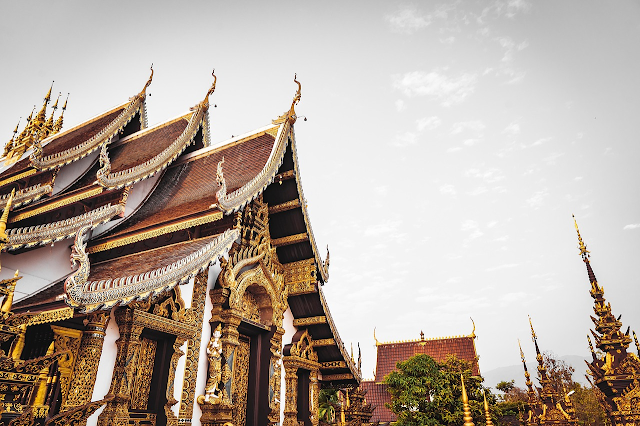
Argao, a charming coastal town surrounded by the endlessly choppy yet turquoise waters of Cebu Strait, might not be on the radar for many travelers journeying to the southern reaches of Cebu. Upon a deeper exploration however, and a few days immersed in the local scene, one will surely uncover a treasure trove of insights, especially after combing the municipality's trio of cherished traditions that all start with the letter "T": Tela (hablon cloth), torta (sponge cake), and tsokolate.


Levy Amosin
The 18th-Century Church of Argao

This Year’s Ibagiw Creative Festival Pairs Baguio’s Established Art Community with Emerging Gastronomy Scene

December 29, 2024


Long before the movie "That Thing Called Tadhana" influenced many from the younger generation to see Baguio City as a destination for broken-hearted people, the City of Pines has attracted a diverse range of individuals from various backgrounds for a multitude of purposes. For artists, the cool atmosphere of this mountaintop town fostered creativity, leading to a flourishing artist community over the years, which resulted in the creation of the Baguio Arts Guild, a prominent organization of artists founded by National Artists Kidlat Tahimik and Benedicto Cabrera aka BenCab, along with the late Santi Bose in 1987.


Ibagiw Creative Festival
Woven baskets by Rovilyn Mayat-an

PH’s Slow Food Movement Gains Momentum as Bacolod City Hosts Second Terra Madre Visayas

December 04, 2024


Pardon me for initially thinking when I first heard the phrase “Slow Food” that it was the Ayurvedic way of consuming food literally in a slow and calm manner. I have heard the term "Slow Food" numerous times since I first encountered it. While it shares similarities with the Ayurvedic approach, emphasizing a healthier approach to food consumption that maximizes the benefits of natural ingredients, it also means something else, a movement where at its heart, is the advancement of local foods, traditional gastronomy and organic food production.


Terra Madre Visayas is held in Bacolod City for the 2nd time

Dinagat Islands: Strange Province No More (Part 2)

November 26, 2024
Witness the raw beauty and mystical allure of the Dinagat Islands. From the legendary Lake Bababu and its submerged cave system to the laid-back revelry of the Bugkosan Festival and the unique Yamashiro-inspired Provincial Capitol, explore why Dinagat is a frontier for sustainable eco-tourism.
Destinations / Caraga Region

Dinagat Islands: Rugged Landscape and Mystical Waters (Part Two)

By Marky Ramone Go November 2024

Witnessing the raw beauty of the Dinagat Islands left me completely in awe, despite being at odds with how I would perceive the backwardness of the province in terms of infrastructures. As a potential eco-tourism destination, its rugged and bare surroundings can be a boon, but they could also be a bane, as other provinces have simply left it behind in terms of development. This leaves the province in an ideal situation as it has the opportunity to opt for a development suited for sustainable tourism, which will put more emphasis on taking care of the province’s natural gifts.

Lake Bababu Dinagat Islands
The mystical Lake Bababu

Dinagat Islands, from a tourism viewpoint, is very exciting. One could liken it to what Siargao was 20–30 years ago. For tourism planners, there are numerous opportunities to learn from, including the application of tourism best practices in many places today, the chance to replicate the success, and the opportunity to learn from the tourism mistakes of Siargao, Boracay, and Palawan.

Bugkosan Festival Coverage
My 2nd time in Dinagat is for the coverage of Bugkosan Festival

The more tourism grows in this province (with sound planning built on more community-based enterprises and ones that won't alienate or force out locals), the farther it can distance itself from its history as a mining island.

Leaving Dinagat Islands after only a few days left me wanting more. “If only I had a few more days to explore," I told myself as we hopped on a ferry boat to Surigao City enroute to our next destination, which is Siargao. Upon my return to Manila a few days later, I had assumed that my journey back to the province would take place a few months into the following year. Unbeknownst to me, the travel gods have granted my wish already.

Raw beauty of Dinagat
I personally prefer the rawness of Dinagat Islands. Hope future development will be all environment-friendly

When I received a call from the publisher of AsianTraveler Magazine regarding a writing assignment to cover this year’s Bugkosan Festival, I immediately said yes, even without knowing the dates it will fall on. As I received all the details about my trip, I quickly packed my backpack with renewed excitement as I look forward to adding to my wonderful experience of discovering more about this province, whose strangeness has now given way to familiarity.

Less than a week later, after that phone call, I found myself on a flight from Manila to Butuan. From the airport, together with two DOT Caraga staff, we motored for a couple of hours to the Port of Surigao City for a sea voyage to the Dinagat Islands.

Dinagat kids and community tourism
Wanted: A tourism program centering on community participation that will benefit the locals more

Seeing Lake Bababu through a Drone’s Eyes

San Jose, the capital of the Dinagat Islands, is the most accessible, having port connections with Surigao City. Unlike my first visit to the province, where we took a chartered speedboat from Hinunduyan, Southern Leyte, to Loreto, my second visit began here via a ferry boat from Surigao Port. Shortly after leaving my belongings at Vine's Bed and Breakfast, my tour guide Al and I met our two boatmen at the resort's jetty and began our day of island-hopping exploration.

Hiking Lake Bababu
Will definitely hike to Lake Bababu next time

Mere minutes into our boat ride, the long white sandy shores of San Jose arrested my attention. Amidst the rocky islets and lush green mountains, it's easy to overlook the province's declaration as a mineral reserve area, which allowed mining companies to operate on the islands.

Babas Cove
Babas Cove

Keeping that fact in mind, it instilled in me a renewed sense of hope that once the province sheds its anonymity and gains recognition among travelers, tourism revenue will increase, thereby making it possible to put the province's mining history in the past.

Heart-shaped Blue Lagoon
The heart-shaped Blue Lagoon in Loreto. More of this here in Part One

What better way to introduce Dinagat Islands to the world than the Blue Lagoon in Pangabangan Island, the Pygmy Forest in Loreto, among many others, and one of our destinations this morning, the mysterious Lake Bababu.

Hagakhak Rock Formation
Rare photo op @Hagakhak Rock

Along the course of our boat ride, we passed through the spectacular Hagakhak Rock Formation, which instantly brought to mind the rock formations of Biri, Samar. Despite being significantly smaller than the rock formations in Biri, the Hagakhak Rock Formation's outer walls bear a striking resemblance. The rocky walls, made of sedimentary rock in a variety of shapes and forms, have patterns reminiscent of the moon, carved out by the ocean waves for thousands or even a million years.

Linear patterns Hagakhak Rock
Impressive linear patterns of Hagakhak Rock

Throughout the afternoon, we made brief stops at Cabacongan and Pagkawasan Beach, both of which provide rustic accommodations suitable for an island setting. If there is one attribute that distinguishes Dinagat from different locations in the country, it is its rawness. While I want tourism to grow in the province, I don't want it to spiral out of control. Hopefully, this untouched natural beauty will continue to exist even when tourists in quest of more off-the-beaten-path locales starts visiting the province.

Marky Ramone Go in Babas Cove
Couldn't resist the temptation to jump into the water

As the water beneath our boat became shallower, I began seeing the rich marine life and corals below, and not far ahead, the white sandy shores of Babas Cove grew more visible. After we finally docked, I wasted no time and jumped into the water. Following a few laps, I rested on the sands and met a man who introduced himself as Mr. Ricardo Langit. He told me that since there were no land titles awarded to landowners back in the day, his family lay claim to the ownership of the property, which stretches to what he tells me, "Lake Bababu." He further explained in Tagalog, "We only have a tax declaration to prove we own this land," before he briefly explained what Lake Bababu looks like.

Clear waters Bababu
Look at that super clear waters and the lush forest

Since Mr. Langit informed me that hiking the lake and back would take a total of 2–3 hours, I decided to use my drone camera instead to capture a glimpse of it. Following his hand directions, I flew my drone toward a clearing of tall trees until it revealed a glimmering green body of water, almost spherical in shape and oozing with a peculiar vibe, right smack in the middle of the forest.

Drone view Babas Cove
Somewhere down there is someone flying a drone. That's me

Despite Lake Bababu's distance from Babas Cove, an underwater cave connects the two bodies of water, transforming Lake Bababu into a blend of sea and freshwater. A bill currently in the Senate advocates for the protection and promotion of Lake Bababu as a tourist destination, citing the lake's 650-meter underground tunnel as the longest known submerged cave system in the Philippines.

Bugkosan Festival Princess Dina
One of Bugkosan Festival's Princess Dina

The Laid-back Revelry of Bugkosan Festival

Coinciding with my return trip to Dinagat Islands is the celebration of this year’s Bugkosan Festival. This year’s Bugkosan, which means “to bind," celebrates the 18th founding anniversary of Dinagat as a province.

Bugkosan Festival Portrait
She's PRETTY ready for the street parade now

After spending my first day island-hopping, I awoke at the first light the next day, excited to join the fray. As someone who has witnessed several Philippine festivals in different places before, I hyped myself, readying to body surf among a throng of crowds. My tour guide Al drove me on a brief habal-habal ride to the gathering stage by the port of San Jose, where we were pleasantly surprised by the sight of just about the right number of people.

Bugkosan Festival Atmosphere
and so are them...

Given the manageable crowd, I explained to Al how I could effortlessly wiggle myself into the action to capture photographs. He responds in Tagalog, "We have a small population, just over 100,000." I nodded and explained to him the disparity in the sheer number of attendees at festivals such as Sinulog in Cebu. “I like this more laid-back festival," I told him.

Bugkosan Street Dancing
The street dancing competition pits 7 contingents from the 7 municipalities

The festival featured mythical characters, Princess Dina and Prince Gat, children of two warring tribes who fell in love with each other. The Princess Dina and Prince Gat from each of the province's seven municipalities formed a circle to perform a ritual dance, signaling the start of the street dancing festivities.

Stationary Dance Competition
The stationary dance competition was held late in the afternoon

The street dance snaked through the winding roads of San Jose until mid-morning, when the festival took a break for a reprieve from the scorching sun. As dusk approached, the drumming beats continued until the winners were announced. Lumad Kagjawnon from the municipality of Cagdinao won the stationary dance competition, while the contingent from Loreto won the street dance category.

A Gunship of a Capitol

While Dinagat Islands may seem underdeveloped in terms of infrastructure when compared to other provinces, it is now exhibiting signs of development. Evidence can be found on a 400-hectare land atop a hill, which was previously classified in 1939 as a mineral or mining reservation and is currently being developed into a Provincial Government Center.

Dinagat Provincial Capitol
The Yamashiro replica doubles as the provincial capitol of Dinagat

The new Provincial Capitol, a replica of the World War II Japanese warship the "Yamashiro," which sank on the waters near Hibosong Island in Loreto, Dinagat Islands, during the Battle of Surigao Strait on October 25, 1944, is one of the buildings currently under construction.

While architecture purists might scoff at the design, it's important to remember that just as novelty songs become huge hits, the residents of the island province might also find this unique look of the Dinagat Islands' new provincial capitol appealing, and a fascinating landmark for tourists to check out.

PBMA Shrine Dinagat
Philippine Benevolent Missionaries Association (PBMA Shrine) complete caption can be read here.

Barely Leafing through the Pages of Dinagat

In my back-to-back visit to Dinagat Islands in a month’s time, I was able to transform the unfamiliarity of the province into lasting memories of the place. Having experienced exploring a whirlwind of intriguing attractions, and friendly encounters with the locals, it is clear that my exploration of the islands of Dinagat merely skimmed the surface of what it can offer to travelers.

Standing Once Again on the Shoulders of Gigantes Islands | Iloilo

November 24, 2024
Third time's a definite charm. Gigantes Islands in Iloilo boast crystalline waters, powdery white sands, and a legendary seafood spread featuring 1-peso scallops. Explore Tangke Lagoon, Cabugao Gamay, and the stunning Bantigue Sandbar.
Destinations / Iloilo

Standing on the Shoulders of Gigantes: A Third Return

By Marky Ramone Go November 2024

Third time's a definite charm. Having visited Gigantes a couple of times before, I've come to the delightful conclusion that its lure never fades. The islands scattered here boast crystalline waters and powdery white sands, making them a perfect backdrop for enjoying a delightful lunch featuring an array of fresh seafood, including the popular scallops and wasay-wasay shells.

Cabugao Gamay Island Gigantes
Cabugao Gamay Island

After a couple of days soaking in the beauty of Sicogon Island, we were welcomed aboard a spacious outrigger boat by the friendly crew Gigantes Island Tours and Services, ready to embark on our island-hopping adventure. Our journey began at a stunning body of water, embraced by towering karst formations, where the landscape opens up to the vibrant blue skies above. They call it Tangke Lagoon.

Tangke Lagoon Gigantes Islands
Tangke Lagoon from the top obviously

Shielded by the rugged cliffs of Isla de Gigantes Sur, Tangke Lagoon hides in a natural saltwater pool. Other than its spectacular landscape, entering the lagoon affords you another thrilling experience. Towering razor-sharp passageways surround it, so a favorable wind and current, along with a balanced tidal level, are necessary for your boat to dock near the entry and for you to easily scramble into the rocky path. Trust me, it's all worth it once you make your way to the lagoon.

Swimming in Tangke Lagoon
Guests delight swimming in the lagoon's crystal-clear waters

Following our stop at Tangke Lagoon, we headed to the most popular island in the group, Cabugao Gamay. On this island, you'll discover the renowned Instagrammable spot, perched atop a small boulder hill. This location offers a perfect vantage point to photograph the island's contrasting shorelines, beautifully framed by its gentle curves that guide your eyes towards the vibrant greens of the island and the turquoise waters surrounding it.

Cabugao Gamay Viewpoint
Wow, Cabugao

As I basked in the sun, blissfully tanning my skin, I started feeling a gentle hunger stir within me. That’s why the words of our boatman and guide, Dondon, sounded to my ears like music when he told us in Tagalog, “Our next destination is Antonia Beach; that’s where we will have our lunch.”

Antonia Beach Seafood Lunch
LUNCCCHHHHH at Antonia Beach

What greeted us on Antonia Beach was a buffet spread filled with the freshest seafood catch, including the famed 1-peso scallops, wasay-wasay shells, giant crabs, grilled and steamed fish, as well as other proteins like pork liempo, roasted chicken, and more, with several fruits for dessert.

Following our hearty lunch we rounded off our island hopping around Gigantes, stopping at a few more islands and the long Bantigue Sandbar, which according to some elderly locals was where some of Tetchie Agbayani’s Playboy photographs was shot.

Bantigue Sandbar Gigantes
Bantigue Sandbar

Our companion, Melanie, a seasoned DOT-accredited tour guide with nearly thirty years of experience, shared that our island-hopping trip merely scratches the surface of what this group of islands has to offer. “In Gigantes Norte, you’ll find a lighthouse, and beyond that, you can explore more sandbars and islands on the other side,” she shares with us.

Powdery Bantigue Sandbar
Powdery sandbar indeed

As our boat sped towards Bancal Port in Carles, memories of my first visit to these islands flooded back, where my friends Samantha, Mia, Mayan, and I hopped onto a habal-habal, heading to our charmingly rustic beachfront accommodation. Sleepless from the night before, we whiled the night away over a few shots of Tanduay Rum and spirited conversations before it took us into a wonderful sleep, gently lulled by the cool ocean breezes.

Fishermen at Gigantes Islands
We stopped on this island and had a chat with some of the fishermen setting up cages to catch shrimps and squids

The following morning, I awoke to the sight of a stunning sun-kissed beach, and it was then that I fully embraced the allure of island living. So, yes, I'd love to spend more time in Gigantes North and the other islands here on my next visit. After all, the fourth time would definitely be charmer.

This is part of a longer article that first appeared on the December 2024 issue of AsianTraveler.

Dinagat Islands: Strange Province No More

November 21, 2024
Dinagat Islands: From its controversial past to its current metamorphosis as a hub for history and natural wonders. Explore the World War II landing sites, the Hibusong Quincentennial marker, the Blue Lagoon's limestone beauty, and the rare Pygmy Forest of Mount Redondo.
Mindanao / Nature

Dinagat Islands: Strange Province No More

By Marky Ramone Go November 2024

As the year 2024 arrived, there were still a few Philippine provinces I’ve yet to visit: Apayao, Sulu, and Dinagat Islands. Out of the three, the latter is the one I knew the least about. Ever since it gained independence from Surigao del Norte and established itself as a separate province in 2006, information about this island province has been scarce. However, there was one particular parricide case that captivated the nation and also the one that first caught my attention about the island in the early 2000s.

Dinagat Islands Blue Lagoon
What an impressive view of Dinagat Islands

And so, in the intervening years, the only thing I associated the province with was its connection to Ruben Ecleo Jr., the prime suspect in the said parricide case, and the religious organization he belonged to, the Philippine Benevolent Missionaries Association Inc. (PBMA), which his father Ruben Ecleo Sr. founded in 1965.

However, as more and more people I knew began sharing their stories of traveling to Dinagat Islands, my curiosity about the province heightened. I began to perceive the province through a completely new lens, a stark contrast to the gruesome event that once hogged the headlines. Ruben Ecleo Jr.'s 2012 conviction for the tragic death of his wife, Alona Bacolod-Ecleo in 2002, brought closure to the case for many. When Ecleo passed away due to natural causes in 2021, the province underwent a significant transformation towards a more positive outlook.

Scenic roads of Dinagat
Exploring the island always leads to scenic roads

While many Ecleo family members maintained key positions in the province's local government because the action of one Ruben Jr. wasn’t seen as representative of the family that has gained the loyalty of the residents, it also saw the province carving out a new narrative that distanced itself from its controversial recent past.

It turns out, as I would later witness, experience, and learn on my trip to the province, that behind the strangeness of the Dinagat Islands, there was a captivating blend of history, natural wonders, and breathtaking landscapes. It was a place that would both surprise and enchant me.

Gibusong port crystal clear waters
Even the port of Gibusong Island retains its crystal clear waters

Dinagat Islands during World War II

Unbeknownst to me, and perhaps many others as well, the main Dinagat Island is a setting to one of history's intriguing "what ifs." Had General Douglas Macarthur chosen to disembark on the island on October 17, 1944, the province would have become the backdrop for a significant moment in the country's history: the landing of General Douglas MacArthur and the allied forces, which signaled the start of the campaign to liberate the Philippines from Japanese occupation. As we all know, the landing would happen on Palo, Leyte, on October 20, 1944.

Campintac Black Beach Marker
The historical marker at Campintac Black Beach

Three days before that, however, on October 17, 1944, the advanced landing force, consisting of Filipino and American forces, waded onto a stretch of beach fronting the waters of Leyte Gulf in the town of Loreto known as "Campintac Black Beach No. 2," named after its World War II call sign "come intact."

Despite the fact that General MacArthur's ship had docked on the beach, only a few personnel, headed by officers Captain Robert Garrett and Colonel Henry Mucci (the same officer who led the rescue operation in the Cabanatuan POW camp, which was made into a Hollywood movie, The Great Raid), disembarked to make contact with the locals and raise the Philippines and US flags.

Campintac Beach Resort

The Loreto landing was an important part of the Battle of Leyte towards the allied forces' liberation of the Philippines from the Japanese, as it gave the liberators strategic sea positions that concluded with the defeat of the Japanese in the Battle of Surigao Strait. Today, a 5-foot-tall memorial stands in the grounds of Campintac Beach Resort where we stayed for the night. The marker is engraved with a dedication honoring the landing on Loreto as an integral moment that helped open the passage of allied ships for the Battle of Leyte.

Gibusong Quincentennial Historical Marker

Fascinatingly, the marine-related historical events on Dinagat Islands extended beyond the October 17, 1944, landing on Loreto. Centuries ago, a fleet of ships had the privilege of sighting the province when the intrepid crew members of the Magellan-Elcano expedition sailed near the shores of Gibusong Island, one of the smaller islands that encircle Dinagat mainland.

The Magellan-Elcano Expedition was a 16th-century Spanish expedition planned and led by Portuguese explorer Ferdinand Magellan. It began solely referred to as the Magellan Expedition when it departed Spain in 1519 with the goal of crossing the Atlantic and Pacific Ocean and opening a spice trading route with present-day Indonesia.

Gibusong Quincentennial Historical Marker
The quincentennial historical marker placed on Gibusong Island

The expedition reached the Philippines after crossing the Pacific, making a first landing on Homonhon, Samar, on March 16, 1521. The expedition would then make another landing on the island of Limasawa in Leyte where the crew would spend a few days before celebrating what is believed to be the first mass in the Philippines on March 31, 1521.

Marble relief sculpture Gibusong
Admiring the sculpture work of Jonas Roces and Francis Apiles

As we all know, the expedition suffered a terrible fate when, on April 27, 1521, the crew encountered the men of Lapu-Lapu, a local chieftain, on the island of Mactan in Cebu. The battle would leave Ferdinand Magellan dead. It then became known as the Magellan-Elcano expedition after Spanish navigator Juan Sebastian Elcano took the lead following Magellan's death and steered the team's return to Spain on September 6, 1522, after totaling more than 60,000 kilometers or an almost three-year voyage to achieve the first circumnavigation of Earth.

This historical marker on Gibusong (Hibusong) Island was one of 34 commissioned and unveiled by the National Historical Commission of the Philippines between October and March 2021 to commemorate the 500-year anniversary of Magellan-Elcano's first circumnavigation of the world in 1521. After spotting Guiuan, Eastern Samar, and landing on Homonhon Island, Gibusong was the fourth point of Magellan’s ships’ route. It is believed that the ships sliced through the passage near the island around March 25, 1521.

Blue Lagoon

Since we only have four days in the province, we filled up our second day with island hop exploration. After a stop at the small port of Gibusong Island, where the waters remain pristine and beckoned us to take a refreshing plunge, we set our sights on Pangabangan Island. This petite islet is encircled by majestic karst formations, with a captivating tidal pool nestled at its heart, known to the locals as the Blue Lagoon.

Pangabangan Island Blue Lagoon
Looks like a heart to me: The Blue Lagoon of Dinagat

Upon arrival, I was instantly captivated by the breathtaking setting, reminiscent of the stunning landscapes found in Coron and El Nido, Palawan. Nevertheless, even though it shares similarities with the two aforementioned places, there is a distinct sense of uniqueness to this particular blue lagoon. It immediately dawned on me that this is the kind of place I imagine Dinagat province to be. Places that are mesmerizing and unfiltered, serene yet endearing, quiet and laid-back.

Free swimming at Blue Lagoon
The only thing missing is Brooke Shields

Pygmy Forest

Continuing our land and sea journey in the province, we encountered a unique natural feature at the summit of Mount Redondo in Loreto: a forest that is unparalleled in the Philippines, with the exception of Mount Hamiguitan in Davao Oriental.

Primarily composed of bonsai trees, this pygmy forest, also referred to as elfin and dwarf forest, spans hundreds of hectares and boasts huge ecotourism potential. As you make your way through a rough mining road aboard a 4x4 truck, you will encounter a huge open-pit mining site—a relic from a Chromite mining firm that ceased operations some thirty years ago.

Mt Redondo Pygmy Forest
Dwarf forest as far as the eyes can see

This road bears witness to the abuse the mountain has endured since the province's designation as a mineral reserve area open for mining in 1939. Although some nickel mining remains in operation in the province, the now defunct mining areas surrounding the pygmy forest could serve as another eco-tourism destination where visitors can learn more about mining's ecological effects.

The hundreds of hectares of bonsai forest, which have already been designated as Key Biodiversity Areas (KBAs), are up for designation as a protected area and a tourism destination according to a legislation that has been introduced and is currently awaiting passage in the Congress. Arriving just moments before sunset, the scenery became even more astounding as the last rays of sunlight filtered through the vibrant foliage of the small trees.

Bonsai trees Dinagat
We were dwarfed by the wide stretch of the pygmy forest

Barely Leafing Through the Pages of Dinagat

In just a few days, I was able to transform the unfamiliarity of Dinagat province into lasting memories of the place. Having experienced exploring a whirlwind of intriguing attractions, and friendly encounters with the locals, it is clear that my exploration of the islands of Dinagat merely skimmed the surface of what the islands of Dinagat can offer to travelers.

As I was exchanging messages with my friend Ariadne, whose father hails from San Jose, the provincial capital, she listed more than twenty places to visit. In our brief four-day trip to Dinagat, we only managed to see around 5-6, thus making our visit just a glimpse into the province. Call it a fleeting look or a quick peek, I see Dinagat as a strange province no more. With the veil of peculiarity now lifted, it seems highly likely that I will be making another visit to the islands of Dinagat in the near future.

Guess what? A few weeks after this, I found myself going back to Dinagat Islands. You can read PART TWO here.

How to Get to Dinagat Islands

If you are traveling by air, take note that the nearest airports are Surigao Airport (via Cebgo from Cebu and Manila) and Butuan Airport (via Cebgo from Cebu and Cebu Pacific and Philippine Airlines from Manila and Cebu). Wherever you arrive, you will have to make your way to Surigao Port in order to reach Dinagat Islands. Outside Butuan airport, there’s a convenient van transportation option available to Surigao City. Travel time typically ranges from 2 to 3 hours. To reach Surigao Port from Surigao City or Surigao airport, you can hop on a tricycle for a half hour trip. From Surigao City port, you can take a ferry to San Jose Port in Dinagat Islands. The duration of this sea journey is one hour.

Listening to the Huni of Nature in Sicogon Island

October 30, 2024
Explore Sicogon Island, Iloilo: A former tropical playground of the 70s and 80s making a sustainable comeback. From the bird's call at Huni Sicogon and the heights of Mount Opao to the ruins of its past heyday, discover why Sicogon is the Visayas Sea’s rising eco-tourism star.
Islands / Iloilo

Listening to the Huni of Nature in Sicogon Island

By Marky Ramone Go October 2024

Aboard a van running at moderate speed, we reached the municipality of Estancia, the ideal jump-off point for Sicogon Island, an hour after leaving Roxas City Airport. As we waited for our speedboat at the port, I ventured into the fish market and marveled at the vast array of dried seafood being sold across numerous stalls. Our guide Melanie Ortega informed me that Estancia is renowned as the hub of commercial fishing in the country, drawing comparisons to Alaska in the early 1900s due to the extensive fishing activities in the area brought about by the large presence of marine life in the waters of Visayas Sea.

Huni Sicogon Island Resort
Home in the island: Huni Sicogon with Mount Opao in the background

Less than an hour on speedboat later, we shifted from the busy fishing port of Estancia into the quiet and secluded setting of Sicogon Island where a short ride over land took us to our home for the night, Huni Sicogon.

Pond reflection Sicogon Island
The sky's reflection on the pond is as clear as the beautiful day

Featuring a spacious property laden with manicured lawns and gardens, a swimming pool, an outdoor bar, and a big shoreline, the resort spreads its 52 rooms on a 2-story building enveloped by the lush forest of the island and the majestic view of the 702-foot-high Mount Opao. A few steps away, one can find the tiny Sicogon Airport that has a short landing strip suited for small propeller passenger planes.

Sicogon Island Airport Landing Strip
The landing strip of Sicogon Island's small airport

With just a little over 4,000 residents, Sicogon's airport used to primarily serve tourists arriving on AirSWIFT flights from Manila until it stopped a few months ago when the airline was acquired by Cebu Pacific Air.

Low tide sunset Sicogon
Low tide sunset vibes

Huni and the island's two other resorts, Hatch and Balay Kogon, all managed and owned by Ayala Corporation, greatly benefit from these flights to the island, which account for 30%–40% of their guests. The three resorts remain hopeful that Cebu Pacific will soon bring back the flights to the island from Manila.

Birdwatching in Sicogon Island
The island is also an ideal birdwatching destination

Sicogon, based on my observation, is an ideal island for travelers looking for peace and quiet in nature. I envision the island’s major draws being those who enjoy yoga, meditation, and wilderness trips, which includes myself. This is why I particularly loved our brief hike through a mapped-out nature trail the next day, which led us to the remnants of a resort that operated on the island between the 1970s and early 1990s. The route also led to a scenic path that took us to a view deck, where we observed ducks floating on a glass-like pond as birds of various species flew against the backdrop of the 702-feet high Mount Opao.

Sicogon Eco-trail
The beginning of the eco-trail

Way before Boracay Island became popular, Sicogon Island was among the first islands to serve as a tropical playground for holidaymakers. If some accounts were to be believed, the island could have also played a role in one of the Philippines' pop culture milestones, as a setting for actress Tetchie Agbayani’s epic Playboy Magazine photoshoot.

Ruins of old Sicogon resort
Ruins of the island's first resort that was abandoned sometime in the early 1990s

As evidenced by the ruins of the old resorts on the island, the ensuing decades following the end of Sicogon’s heyday in the 1990s, the once-vibrant island, succumbed to time rendering it a hidden gem of the past.

Sicogon heritage ruins
Not the Mayan ruins, but of an old resort on the island.

That is until recently when a slew of positive developments began to unbox Sicogon and reintroduces the island once again. The landscape was quickly transformed as Ayala Corporation, the company that owns the island’s three resorts, relocated the small community in the coastal areas towards inland where the company also built new housing units that will soon be awarded to some residents.

Nature walk in Sicogon
A walk in the woods is definitely in order when visiting Sicogon Island

There’s Huni Sicogon, which caters to those seeking a touch of luxury in seclusion, while Balay Kogon, perched on a rocky hill with stunning views of the Visayas Sea, offers a different experience and an environment conducive for digital nomads. For the adventurous traveler, Hatch provides a laid-back atmosphere that appeals to backpackers.

Marky Ramone Go birdwatching
Counting ducks and birds.

Being a first timer on the island, I can already sense that Sicogon is gearing up a potential tourism resurgence, positioning itself as a key attraction in Iloilo Province. Despite spending only a couple of days on the island, the name of the resort where we stayed wasn’t lost on me. Huni, when translated to English, would mean a “bird’s call" or “sound of nature." Even for such limited time, I found myself captivated by the enchanting melody of Sicogon.

Approaching Sicogon Island

With the cheerful chirping of birds, the gentle rustle of trees swaying in the wind, and the rhythmic echoes of waves lapping against the shore, the island appears singing its way to reclaim its former splendor.

Inviting waters of Sicogon
The inviting waters of Sicogon
More Travel Stories