
As modern home aesthetics trended on social media via the popular Home Buddies group on Facebook, a replica of a typical 19th-century mansion in Intramuros reminded visitors that not all olden things must be forgotten. The Casa Manila Museum in Intramuros offered a glimpse into the lifestyle of affluent Filipino families dating back to a century ago. Featuring antique furniture pieces and ornaments made in China and Europe and by local artisans, complemented well by its impressive stone-and-wood structure, one could easily come to the conclusion that not even IKEA could hold a candle to home living during colonial times.
19th Century Home Buddies Vibe at Casa Manila Museum | Intramuros

The House in Calle Jaboneros
Casa Manila Museum was a reproduction of the 1850s San Nicolas Mansion that originally stood along Calle Jaboneros in Binondo, Manila. Designed by architect J. Ramon L. Faustmann, Casa Manila was constructed in 1980 on one of Intramuros' original villages—Barrio San Luis—right across San Agustin Church.

Representing a typical Filipino "ilustrado" home, Casa Manila welcomed museum-goers into a wide and airy living room after climbing a flight of stairs before being led to a series of living quarters and various rooms—which included a library, kitchen, music and study room, oratorio (prayer room), and even a banquet hall—all boasting of decorations and furnishings a wealthy family from the era could easily import from Europe.

Blending perfectly with the foreign objects were local elements like the Capiz windows, antique treasure chests (baul), and other signs of Filipino artistry and carpentry works. Each room came with a different ceiling design that stood out thanks to its intricate metalwork influenced by the plasterwork seen in old houses in Europe.
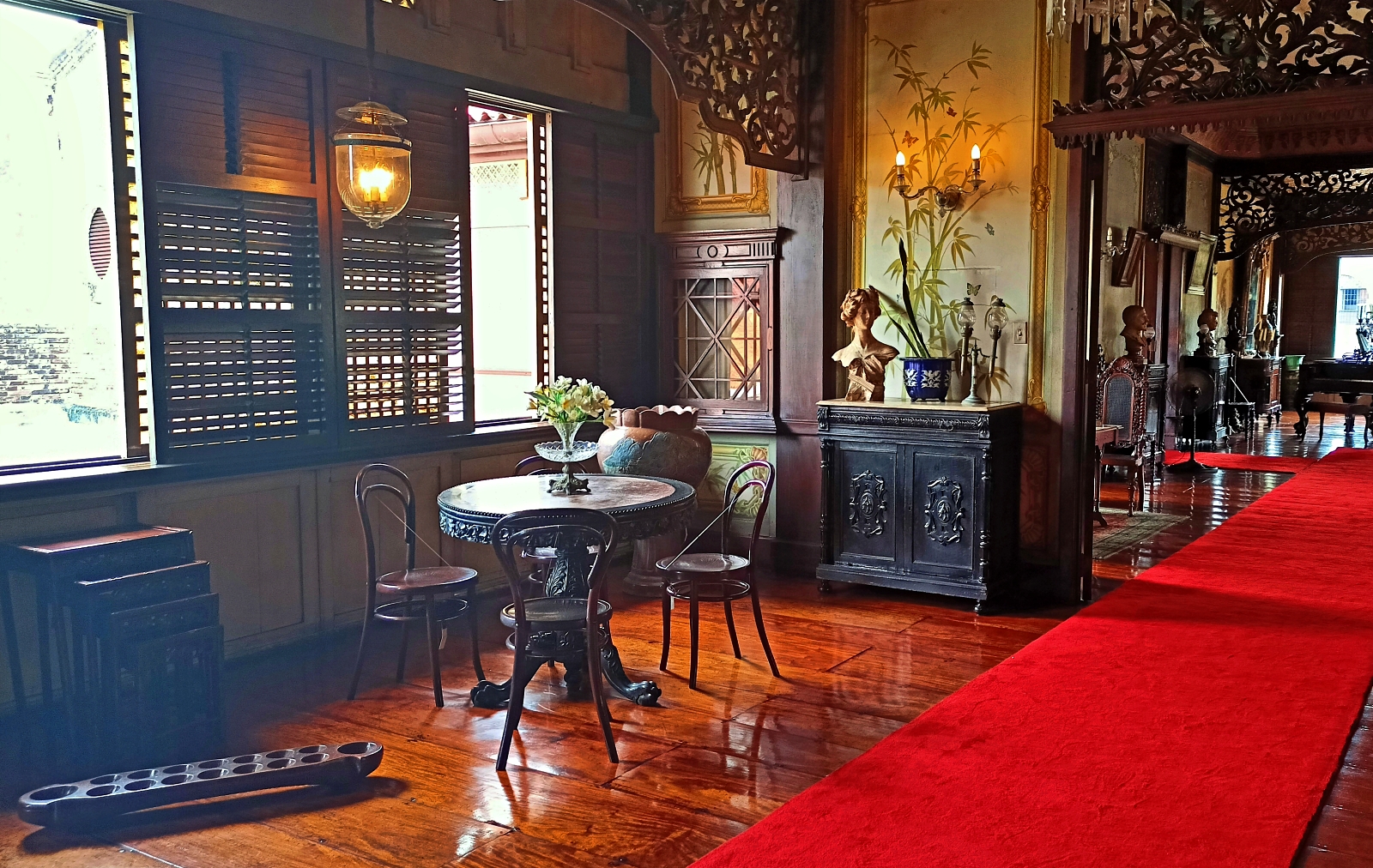
Casa Manila dished an odd yet attractive mix of diverse architectural influences. From its Spanish-inspired balconies, to the quirky color amalgamations of the "sawn and carved" look of Victorian-styled homes, to the elements of a Filipino colonial house, it revealed the best money could afford when it came to building a mansion in the old days.
Intramuros Walk
My friend Louise and I went there after spending a couple of hours enjoying the breeze and shade at Baluarte San Diego—also inside Intramuros. I told her I had been to this house several times before but never had the chance to take some good photographs. To which Louise admitted that, “I’ve never been here before.”

After having drinks at the café located downstairs of Casa Manila, we proceeded to enter after being briefed by a tour guide on the rules and regulations inside, which included the most important instruction to follow: do not touch anything.

Inside, we were both immediately mesmerized just at the same time we planted our feet on the red-carpeted stairs and hallway as we showed ourselves the way to the mansion’s different rooms.

Like negotiating a miniature maze discovering every fancy corner adorned with fascinating trinkets, furniture, and decor, we ended our tour of Casa Manila by passing through the azotea leading down to the courtyard.
Now filled with new knowledge about the history of both Baluarte San Diego and Casa Manila, Louise and I decided that a heavy meal in Binondo Chinatown was in order.


