
More than a decade had passed since I first journeyed to Palaui Island. Back in those days, I was still in my earliest phase of exploring the Philippines. Cagayan Province, being in the farthest northeastern part of Luzon, seemed like a foreign country to me then. Locating it on the map, a couple of female friends and I set out on a trip that would leave a beautiful set of memories in my memory vault. After a fifteen-hour bus ride to Sta. Ana, Cagayan, followed by a three-hour van ride, a half-hour boat ride, and finally, a three-hour trek, we pitched our tent at the foot of a hill where the historic Cape Engaño Lighthouse stood.
For the Third Time, Palaui Island is Still a Charm | Sta. Ana, Cagayan

I considered my first journey to Palaui Island as one of those that baptized me into a life of wandering. Since then, a fifteen-hour bus ride felt like nothing but a welcome and integral part of journeying. Therefore, Palaui Island, aside from its exceptional beauty, remained a special place in my mind.

The second time I made it to the island was in two thousand seventeen, as part of Lakbay Norte, a media familiarization tour organized by NLEX to promote destinations in Northern Luzon. Traveling by chartered bus from Manila, we visited several places in the Cagayan Valley, capped off by a turbulent sea journey to Palaui and nearby Anguib Beach.

Summing it up, my Palaui trilogy provided me with a different experience at each turn. And as I found out on that recent trip, Palaui Island retained its charm, even for the third time.
Cagayan’s Nature and Adventure Tourism Circuit
After a two-year ban on visitors due to the pandemic, the Palaui Island Protected Landscape and Seascape finally reopened on March ninth, two thousand twenty-two. At that time, the Department of Tourism and DOT Region II actively promoted a nature and adventure tourism circuit in the region that included this island.

The newly designed route aimed to leverage the popularity of the island among adventure seekers and nature lovers to promote other interesting places in the province as part of an itinerary that could be completed in three to five days.
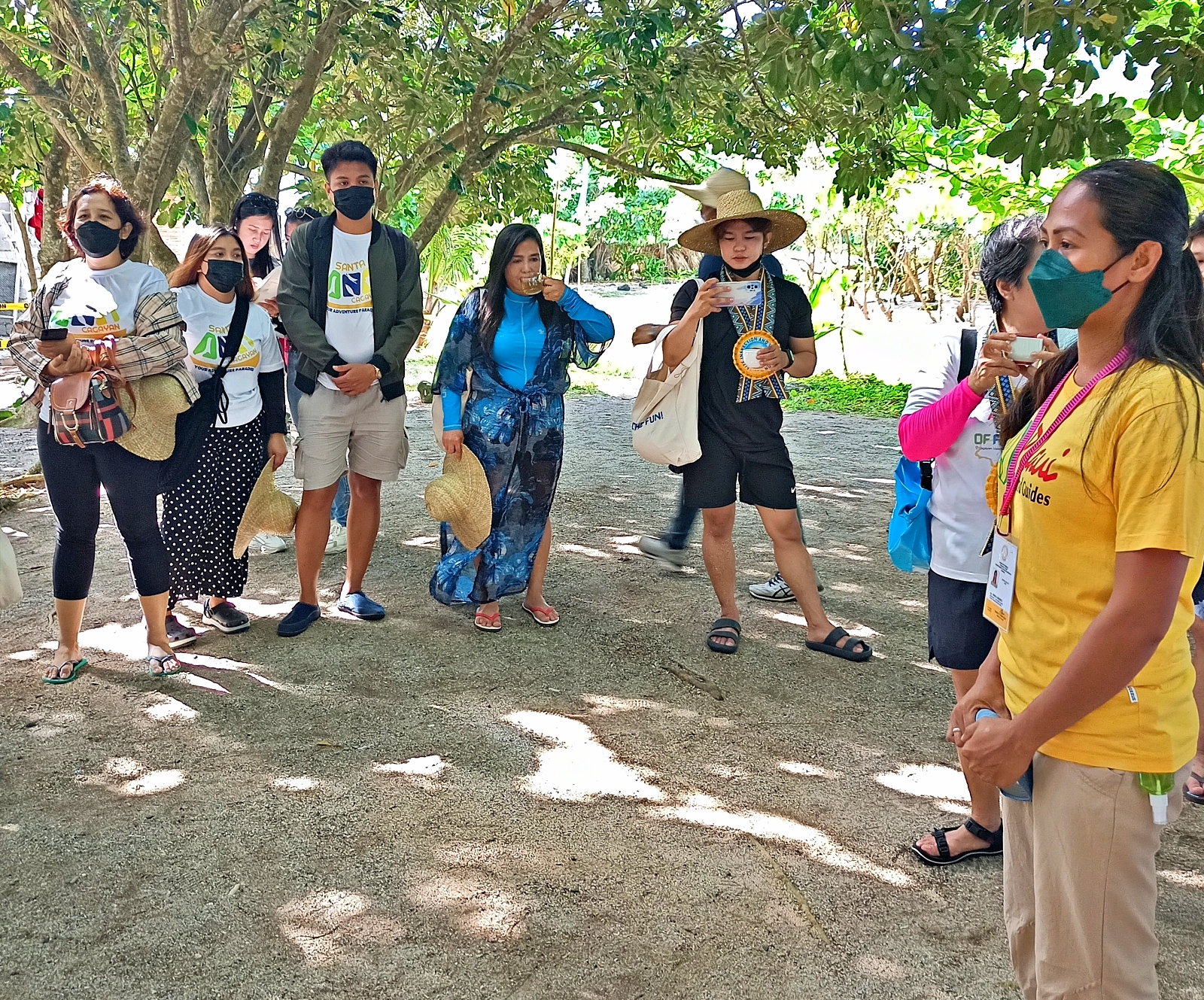
I was fortunate to be invited by the DOT to join its Site Validation and Technical Inspection of the said tourism route. In collaboration with a dozen tour operators from different parts of the country, we tested the circuit by visiting the locations and experiencing various activities included in it to see if it would appeal to travelers and, in turn, entice them to explore more of the province as opposed to just visiting one or two destinations.

Other than Palaui Island, we visited a community in Casagan, where we went on a firefly-watching tour in the evening and, afterward, had dinner with the community participants of the DOT's "Kulinarya" program—a culinary campaign that aimed to promote local cuisine. On our third day, we experienced beltfishing with local fishermen, where we witnessed their traditional method of catching the espada fish. Also part of the tour was a morning hike the next day to Buwacag Falls before capping it off with a heritage tour of Tuguegarao on our way back to the airport.

At that time, the Nature and Adventure itinerary was open to revisions and included potential additional destinations for the future, such as Anguib Beach and its surrounding mangrove forest.
The Hike to Cape Engaño Lighthouse
As a protected area and national park managed by the Protected Area Management Board and the Department of Environment and Natural Resources, Palaui Island imposed a strict one-hundred-visitor-per-day policy. During my first visit to the island, we entered through the community side facing Sta. Ana; this time, though, visitors were only allowed to dock at its northwestern side in Siwangag Cove close to the Cape Engaño Lighthouse.

After a brief orientation with the community tour guides, I volunteered to be among the first group to climb the hill. Walking at a slow pace allowed me to take in the spectacular scenery en route to the hilltop.

Unlike the rugged terrain a decade ago, concrete stairs had been built leading up to the lighthouse. While I was not sold on the idea of putting up concrete structures on beaches and islands, I found the stairway almost blending well with the surrounding nature. After almost three hundred steps, I arrived at the lighthouse with our young guide—a local Palaui resident who was among those trained to become island guides—almost out of breath but filled with awe and delight at the picturesque, three hundred sixty-degree view of the rolling hills and the blue waters of the Pacific Ocean.

“Like a fine wine, this backdrop just gets better,” I thought to myself. I found a spot to sit on the window sill of the Spanish colonial lighthouse built in eighteen ninety-two and designed by Magín Pers, the same architect who designed Cape Bojeador in Burgos, Ilocos Norte, and the Capones Island Lighthouse.

After a few minutes, I trekked to the view deck and lay on the grassy knoll. While staring intently at the mighty Pacific Ocean swells crashing on the walls of the Dos Hermanos islets below, I gradually turned my head only to be met with a slideshow of postcard-like images of sloping hills, lush vegetation, deep crevices, blue skies, swaying grass, the rustic lighthouse, and so on.

It was at that moment when I felt the island of Palaui reacquaint itself with me once more. Acknowledging the universe and my good karma, I answered back to the hissing wind in a whisper, “I’m happy to be here again.”
Things to Know Before Your Visit
- Register cleanly at the Municipal Tourism Office located inside the Sta. Ana port perimeter fields.
- Attend the mandatory short briefing highlighting island do's and don'ts alongside specific boat tracking assignments.
- Pay a baseline visitor fee of one hundred pesos for travelers arriving from outside Sta. Ana boundaries. Native Sta. Ana residents qualify for a discounted fifty pesos access bracket.
- Auxiliary structural fees checklist: Environmental fee (twenty pesos), Tour Guide (three hundred fifty pesos for one guide per four guests), Garbage bag deposit (two hundred pesos).
Standard Boat Rental Rates Structure:
- Cape Engaño (Palaui Island Main Loop): Two thousand pesos
- Anguib Beach Corridor: One thousand eight hundred pesos
- Crocodile Island Transit: Eight hundred pesos

You could negotiate with your boatman if you wanted to visit a combination of the islands, or all three of them.

Winning Tip: For a hassle-free trip, you could contact Cagayan Tourism to connect you to an accredited tour operator who would prepare everything for your trip.


